Category: News

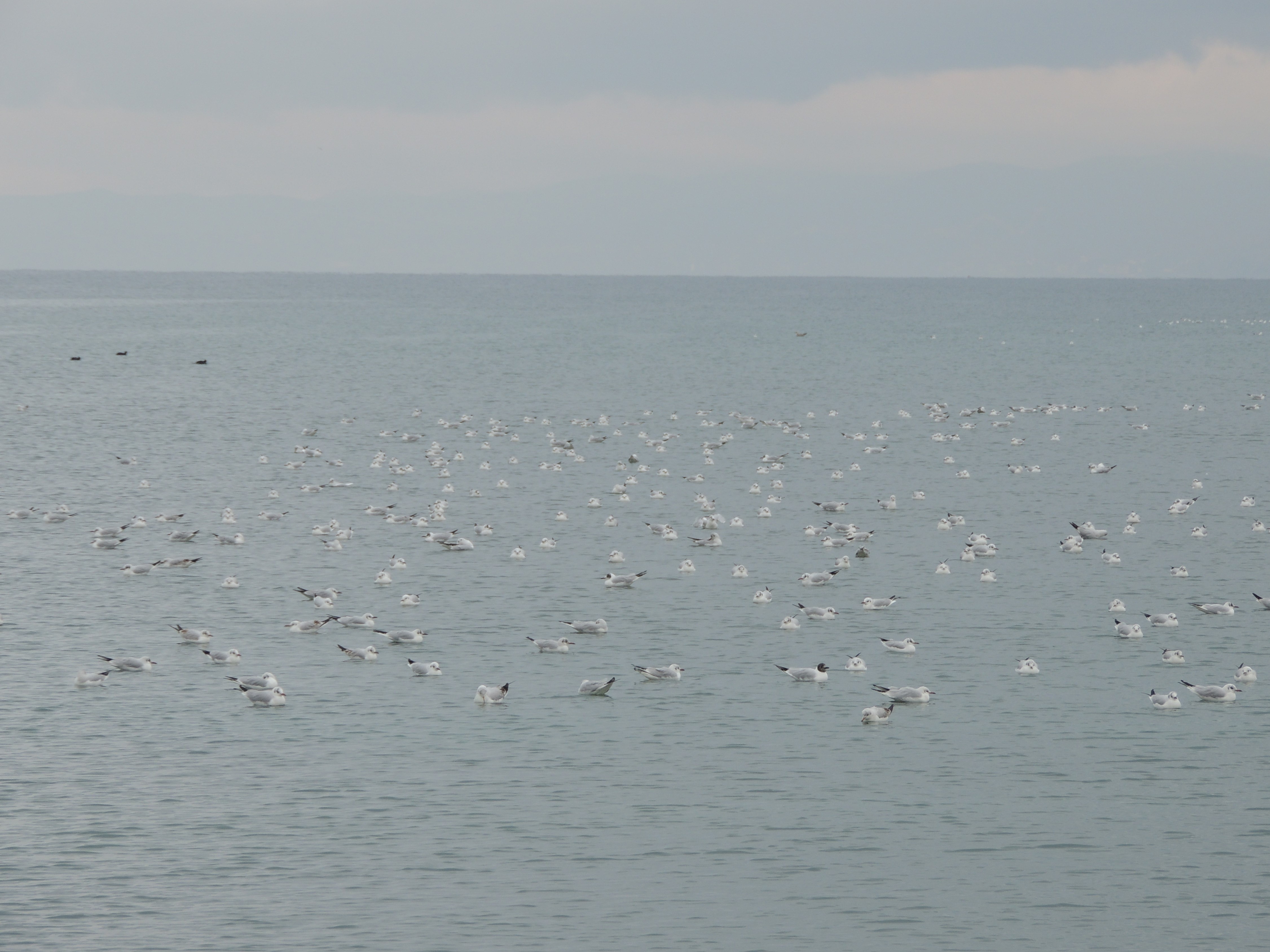
  • 2018 International Waterfowl Census in Macedonia complete

    2018 International Waterfowl Census in Macedonia complete

    For the ninth consecutive year, on the weekend of 13 and 14 January 2018, MES employees and volunteers conducted bird counting on Macedonia’s three natural lakes, also including adjacent water reservoirs and wetlands. Despite the biting cold, the teams’ weather-defying spirit and enthusiasm made an enjoyable endeavour out of the International Waterfowl Census (IWC) in Macedonia, resulting in a total count of as much as 11,000 birds on Ohrid Lake and Prespa Lake, and 5,500 birds on Dojran Lake.

    The International Waterfowl Census is the largest volunteer waterbird count with a long-standing tradition ever since 1967. Led by the Wetlands International and in cooperation with numerous local organisations, this event has become the much needed source of information pivotal to creating policies on wetland management and protection.

  • 2nd Congress of Ecologists of Macedonia with International Participation, Ohrid 2003

    2nd Congress of Ecologists of Macedonia with International Participation, Ohrid 2003

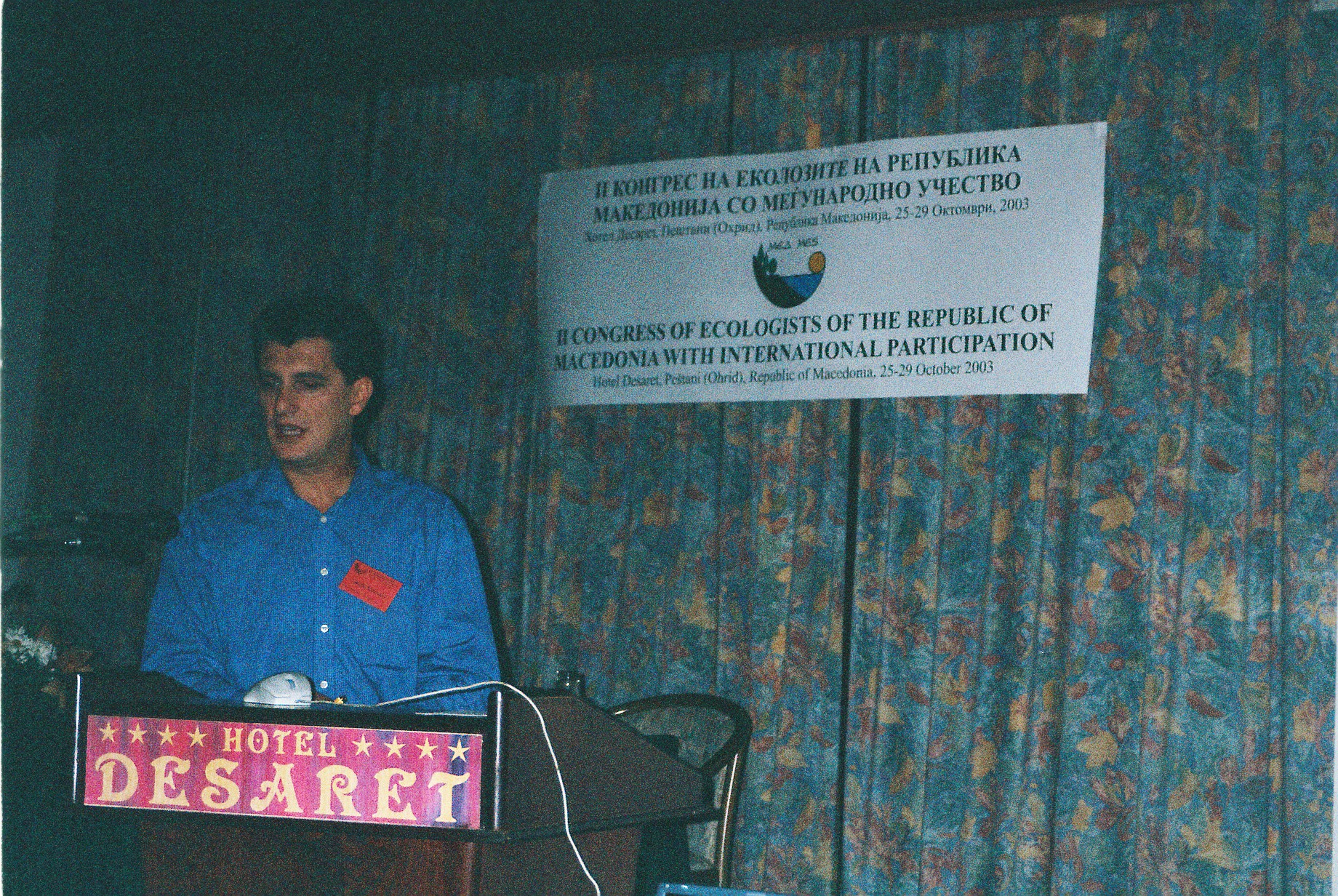
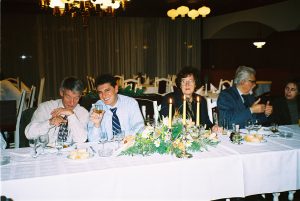
    The 2nd Congress of Ecologists of Macedonia with International Participation was held in Ohrid in the period 25–29 October 2003.

    Participants presented results and scientific achievements within nine ecological sections, as follows:

    1. Terrestrial ecosystems;
    2. Aquatic ecosystems;
    3. Conservation of biodiversity and geodiversity;
    4. Agroecology;
    5. Ecology of populations and biocenology;
    6. Ecological monitoring;
    7. Pollution and protection of the environment;
    8. Ecological education; and
    9. Public participation and NGOs.

    The presented papers (a total of 101 papers) and plenary lectures were printed in the Proceedings of the 2nd Congress of Ecologists of Macedonia with International Participation, organised into six summary sections:

    1. Terrestrial ecosystems: ecology, ecophysiology and biocenology;
    2. Aquatic ecosystems and hydrobiology;
    3. Biodiversity: research and protection, geodiversity;
    4. Agroecology;
    5. Environmental protection and monitoring; and
    6. Ecological education.

    Scientists both from Macedonia and the neighbouring countries, like Serbia and Montenegro, Bulgaria, Slovenia, and Romania, showed interest and took part. Papers presented during the Congress hint to the obvious attention and interest of scientists in studying terrestrial and aquatic ecosystems, especially in the field of biodiversity and geodiversity conservation.

    Despite the efforts made by MES to encourage and inspire ecological NGOs from Macedonia and the region to partake in such congress, no application and participation took place for the section relevant to their work NGOs and the involvement of the public.

  • 1st Congress of Ecologists of Macedonia with International Participation, Ohrid 1998

    1st Congress of Ecologists of Macedonia with International Participation, Ohrid 1998

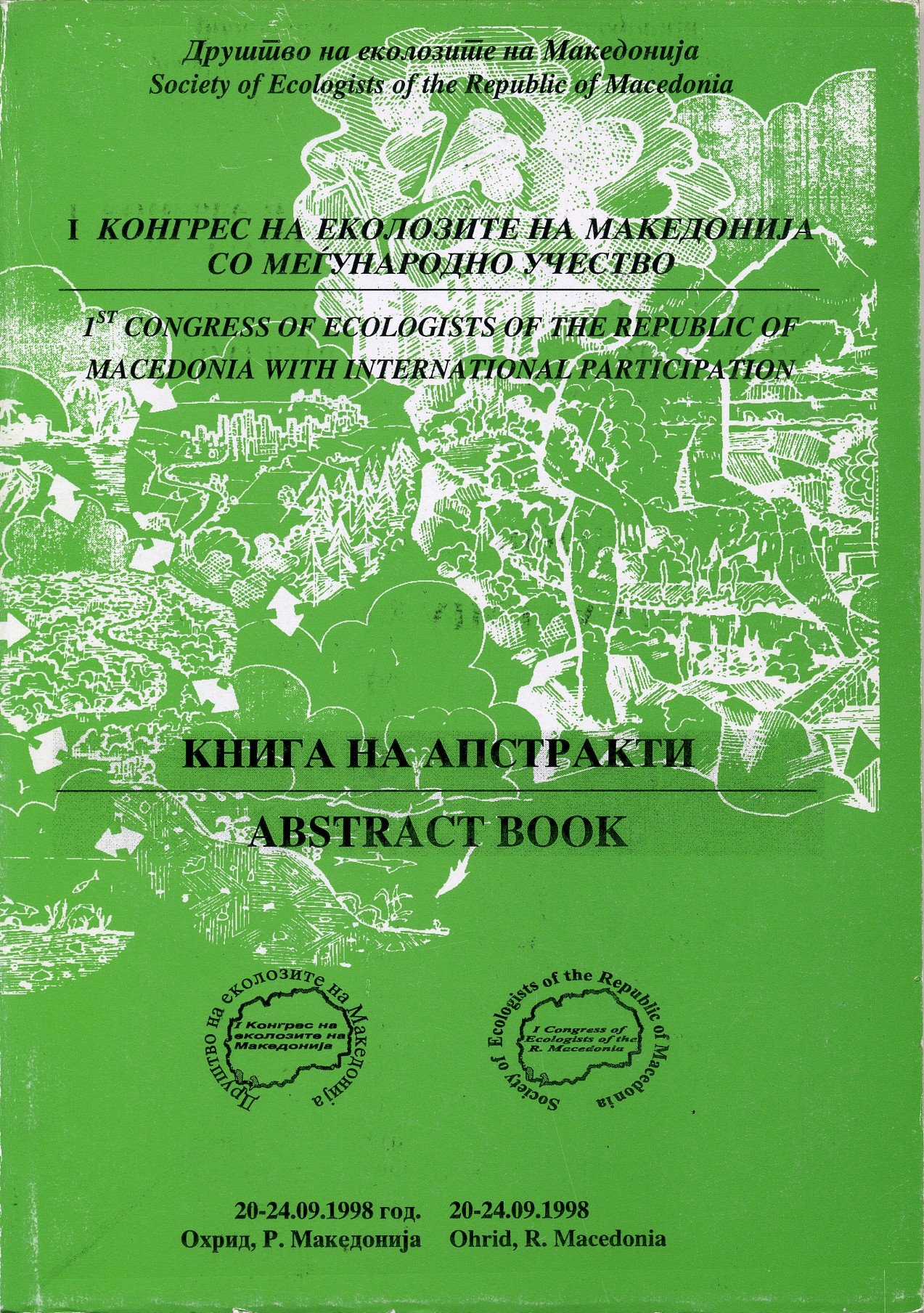
    Ohrid, 20-24 September 1998, hosted the 1st Congress of Ecologists of Macedonia with International Participation. Plenary lectures were published and printed in the Book of Plenary Lectures. According to the topic and the field of research, participants through their papers presented their findings and scientific achievements within 10 ecological working sections, as follows:

    1. Terrestrial ecosystems;
    2. Aquatic ecosystems;
    3. Biodiversity, its protection, promotion and sustainable use;
    4. Agroecology;
    5. Ecological monitoring;
    6. Pollution of the environment and ecotoxicology;
    7. Urban ecology;
    8. Systems and measures for environmental protection;
    9. Ecology and society: the role of institutions and NGOs in the system;
    10. Ecological education and training.

    The congress was attended by over 200 participants from Yugoslavia, Croatia, Bulgaria and Macedonia. A total of 177 papers were presented, out of which only 97 complete papers were published and printed in the two-volume Proceedings of the 1st Congress of Ecologists of Macedonia with International Participation.

    Presented findings and interest shown by participants indicate that intense ecological research at ecosystem level had been conducted in the preceding period in Macedonia and the region, with growing interest in the causes of environmental pollution..


  • Spring Alive

    Spring Alive

    [vc_row][vc_column][vc_column_text css=”.vc_custom_1528983357993{margin-bottom: 0px !important;}”]Time frame: 2010–2017

    Funding: Mitsubishi Corporation Fund for Europe and Africa

    Partner: Polish Society for the Protection of Birds(OTOP), BirdLife International

    Project goal: Creating awareness and passion to conserve biodiversity among youth in Europe and Africa. The project focuses on learning about the migratory birds that bridge whole Europe and Africa, as well as on promoting field trips by which students will forge a stronger bond with nature.

    Contact person: Ksenija Putilin putilin@mes.org.mk[/vc_column_text][mk_divider style=”shadow_line” margin_bottom=”30″][mk_fancy_title tag_name=”h3″ size=”30″ force_font_size=”true” size_smallscreen=”30″ size_tablet=”25″ size_phone=”22″ font_family=”none”]Проектни Активности[/mk_fancy_title][mk_blog style=”thumbnail” grid_image_height=”300″ cat=”113″][/vc_column][/vc_row]

  • Green Belt Day

    Green Belt Day

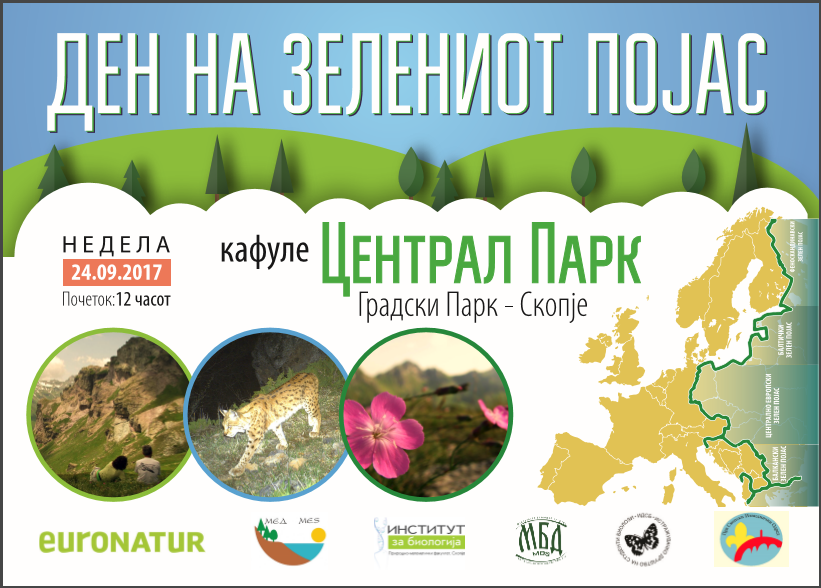
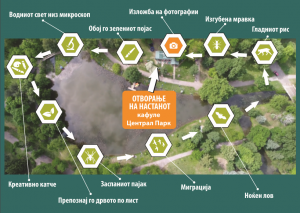
    The Macedonian Ecological Society in cooperation with the Euronatur Foundation from Germany, is organising their second Green Belt Day in a row to be held on the 24 September (Sunday) 2017 in the Skopje City Park. The event will begin at 12 p.m. and it will last until 15 p.m. We will celebrate the day with a series of different activities around the lake, and in the Central Park Cafe.

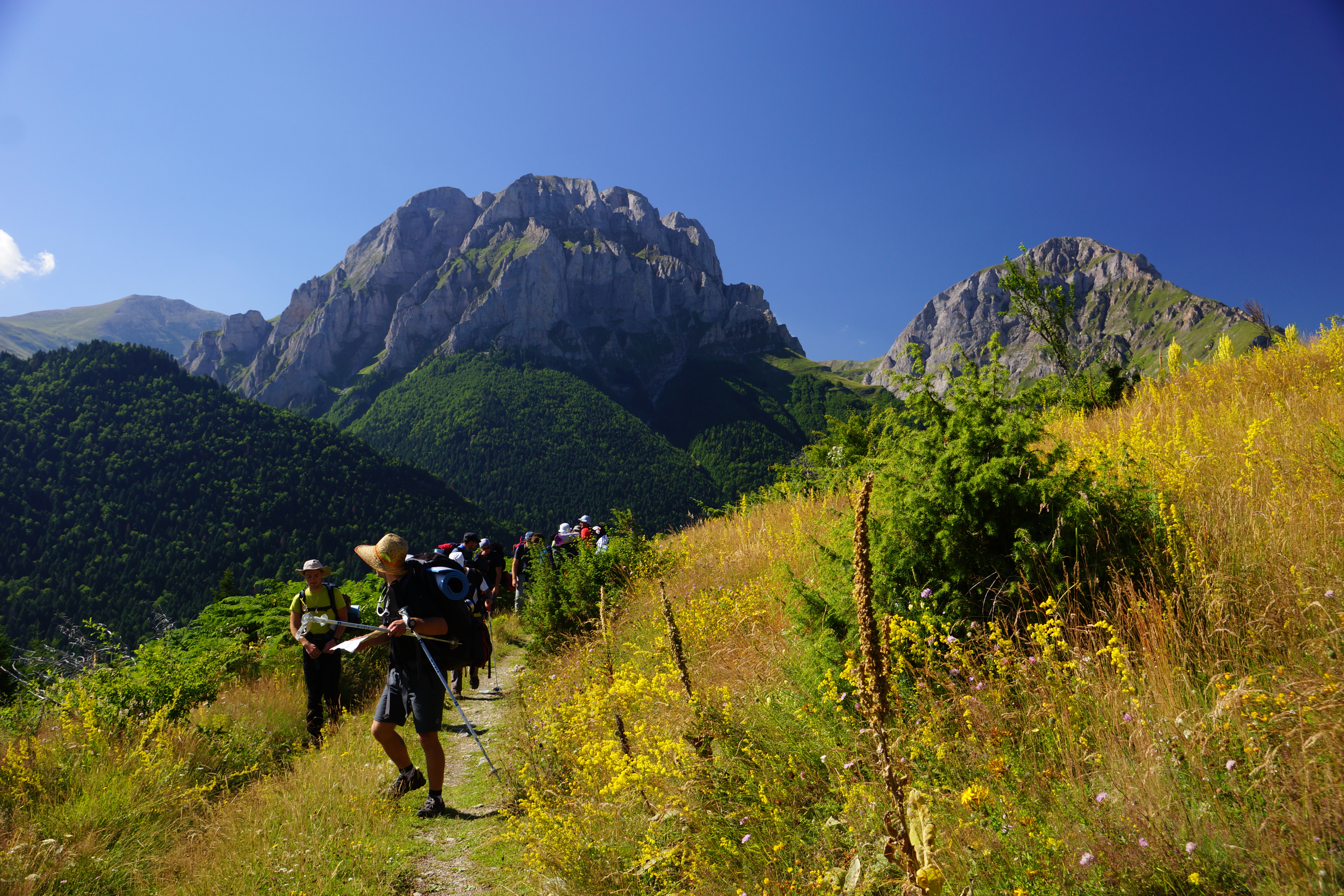
    The purpose of this event is to promote the valuable and rich wildlife found along the Green Belt, which extends through 24 countries in Europe, uniting important landscapes and habitats. The Macedonian part of the Green Belt encompasses the transboundary region with Albania, Greece and Bulgaria.

    During the event, participants will be informed about the values of the Green Belt through a photo exhibition. The youngest participants will witness a migratory simulation and through different interactive games about animals they will have the opportunity to learn about the biology of these species.

    The creative corner will encourage children to make interesting and creative works from natural materials. In addition, the chance to observe through a microscope will allow them a closer look into the wildlife found in water.

    This day is also celebrated in nine different Balkan counties, each having their own different activities.

    The Green Belt in Europe was formed along the former “Iron Curtain” which functioning as a barrier between Eastern and Western Europe for almost 40 years. Along this barrier, an incredible ecological network was formed and developed. Human activities were banned in these areas and thus the wildlife was able to develop and move freely. As a result, this network includes some of the most important areas for biodiversity conservation in Europe.

    Within the event, prizes will be awarded for the best photographs from this year’s photo competition on the Green Belt, as organised by the Macedonian Ecological Society.

    Partners and supporters of the event are the Macedonian Biological Society, Institute for Biology, Biology Students’ Research Society, First Scout Unit of Skopje and Anhoch.
     

  • Balkan Lynx Recovery Programme

    Balkan Lynx Recovery Programme

    [vc_row][vc_column][vc_column_text css=”.vc_custom_1530097407240{margin-bottom: 0px !important;}”]Time frame: 2006–2018

    Funding: MAVA Foundation, Switzerland

    Partners: PPNEA – Albania; CZIP – Montenegro; ERA – Kosovo; FINCH – Kosovo; EuroNatur – Germany; KORA – Switzerland

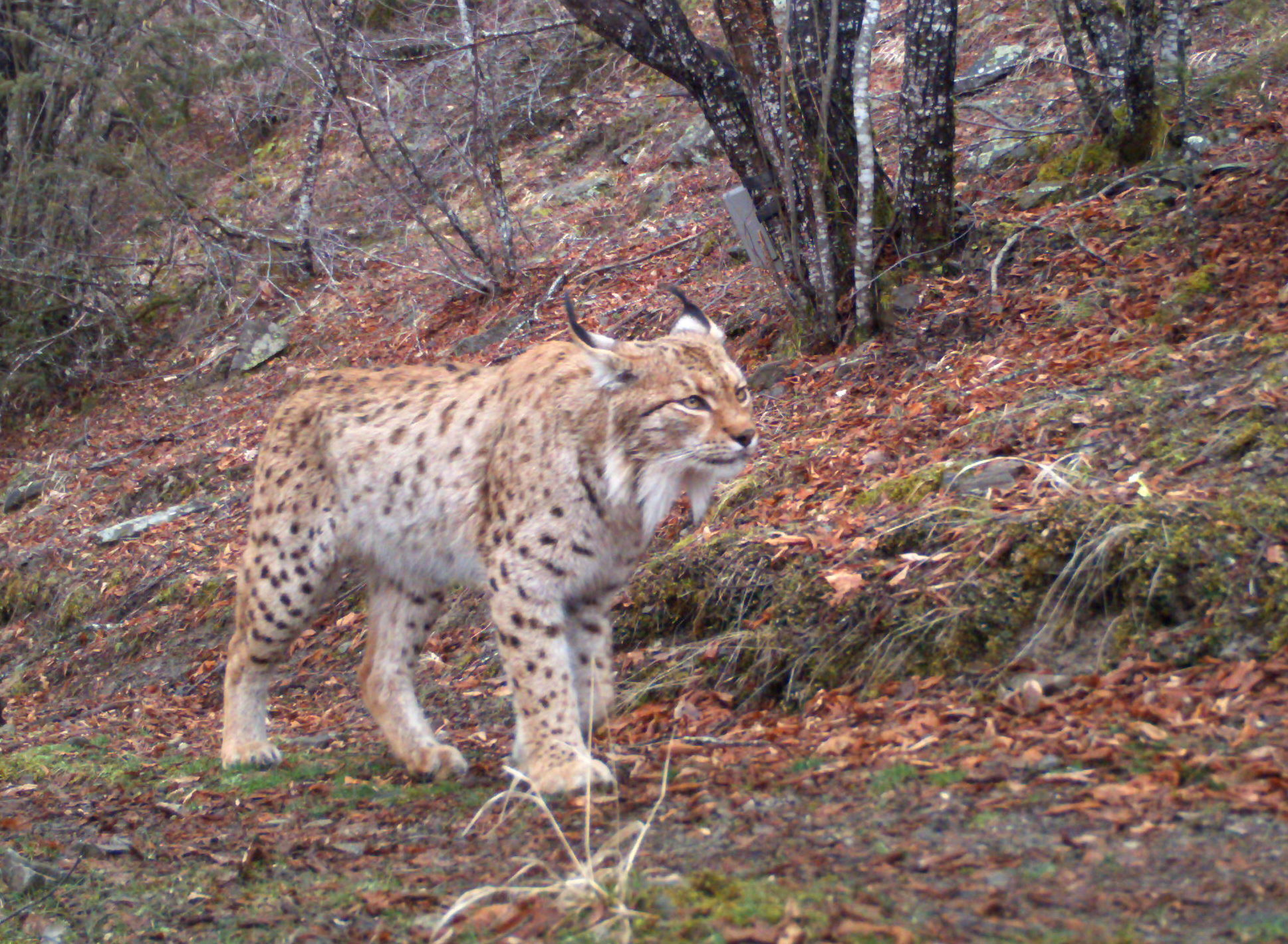
    Programme goal: For more than ten years now, the Balkan Lynx Recovery Programme has worked on the protection of the critically endangered Balkan lynx. Activities primarily focus on: lobbying for the declaration of new protected areas, involving locals in the protection, research, education and monitoring activities on Balkan lynx in the Southwest Balkans.

    Phase 4: 2016-2018

    As of 1 August 2016, the programme entered its fourth implementation phase. Unlike the previous three phases, the new project activities were designed using Open Standards for the Practice of Conservation.

    Phase 4 activities: Activities focus on six different strategies: declaration of new protected areas, efficiency of already established protected areas, legislation pertinent to the lynx, education of the locals, research and monitoring, sustainable hunt and fight against poaching.

    Contact persons: Dime Melovski melovskid@mes.org.mk, Aleksandar Stojanov stojanov@mes.org.mk, Gjorgje Ivanov ivanov@mes.org.mk[/vc_column_text][mk_divider style=”shadow_line” margin_bottom=”30″][mk_fancy_title tag_name=”h3″ size=”30″ force_font_size=”true” size_smallscreen=”30″ size_tablet=”25″ size_phone=”22″ font_family=”none”]Project News[/mk_fancy_title][mk_blog style=”thumbnail” grid_image_height=”300″ cat=”397″ exclude_post_format=””][/vc_column][/vc_row]

  • Supporting a Sustainable Future for People and Nature in the Osogovo Mountain

    Supporting a Sustainable Future for People and Nature in the Osogovo Mountain

    [vc_row][vc_column][vc_column_text css=”.vc_custom_1528983806715{margin-bottom: 0px !important;}”]Time frame: 2015–2018

    Funding: Project’s main financial support is provided by the German Federal Environmental Foundation (DBU), whereas part of the funds are secured by the Frankfurt Zoological Society (FZS).

    Partners: Bulgarian Biodiversity Foundation and EuroNatur from Germany.

    Project goal: Conservation of the biological diversity in joint efforts with the local population and promotion of sustainable use of natural resources.

    Contact person: Despina Kitanova kitanova@mes.org.mk[/vc_column_text][mk_divider style=”shadow_line” margin_bottom=”30″][mk_fancy_title tag_name=”h3″ size=”30″ force_font_size=”true” size_smallscreen=”30″ size_tablet=”25″ size_phone=”22″ font_family=”none”]Проектни активности[/mk_fancy_title][mk_blog style=”thumbnail” grid_image_height=”300″ cat=”120″][/vc_column][/vc_row]

  • The Woodpecker Trail

    The Woodpecker Trail

    [vc_row][vc_column][vc_column_text css=”.vc_custom_1528984408075{margin-bottom: 0px !important;}”]Time frame: October 2015 – April 2016

    Funding: Swiss Agency for Development and Cooperation (SDC)

    Partners: Pharmahem – Skopje, and the primary schools “Cyril and Methodius” and “Malina Popivanova” from Kochani.

    Project goal: Promoting the values of ancient beech forests, education, raising public awareness and better reception of the concept of sustainable use of beech forests.

    Contact person: Svetlana Pejovikj arsovska@mes.org.mk[/vc_column_text][mk_divider style=”shadow_line” margin_bottom=”30″][mk_fancy_title tag_name=”h3″ size=”30″ force_font_size=”true” size_smallscreen=”30″ size_tablet=”25″ size_phone=”22″ font_family=”none”]Новости од МЕД[/mk_fancy_title][mk_blog style=”thumbnail” grid_image_height=”300″ cat=”21″][/vc_column][/vc_row]

  • Protecting biodiversity in the Balkans – Strengthening the cooperation along the Balkan Green Belt

    Protecting biodiversity in the Balkans – Strengthening the cooperation along the Balkan Green Belt

    [vc_row][vc_column][vc_column_text css=”.vc_custom_1528983531555{margin-bottom: 0px !important;}”]Time frame: January 2015 – December 2016

    Funding: German Federal Environmental Foundation (DBU)

    Partners: The IUCN Programme Office for South-Eastern Europe and EuroNatur from Germany are the main partners in the project. In each of the nine countries along the Balkan Green Belt, key NGO partners are involved in the implementation of project activities: MES from Macedonia, PPNEA from Albania, Green Balkans from Bulgaria, SPP from Greece, ERA from Kosovo, CZIP from Montenegro, BPSSS from Serbia, DAYKO from Turkey and the Speleological Association “Explorers” from Romania.

    Project goal: Protection of the transboundary ecological network along the borders of Albania, Bulgaria, Greece, Kosovo, Macedonia, Montenegro, Serbia, Turkey and Romania through enhancing cooperation along the Balkan Green Belt.

    Contact person: Daniela Zaec zaec@mes.org.mk[/vc_column_text][mk_divider style=”shadow_line” margin_bottom=”30″][mk_fancy_title tag_name=”h3″ size=”30″ force_font_size=”true” size_smallscreen=”30″ size_tablet=”25″ size_phone=”22″ font_family=”none”]Новости од МЕД[/mk_fancy_title][mk_blog style=”thumbnail” grid_image_height=”300″ cat=”21″][/vc_column][/vc_row]

  • Biodiversity Conservation through Sustainable Management of Resources in Shar Mountain

    Biodiversity Conservation through Sustainable Management of Resources in Shar Mountain

    [vc_row][vc_column][vc_column_text css=”.vc_custom_1528984605251{margin-bottom: 0px !important;}”]Time frame: 2015–2017

    Funding: German Federal Environmental Foundation (DBU)

    Partners: EuroNatur from Germany

    Project goal: Promoting sustainable use of natural resources in six municipalities along Shar Mountain and active involvement of the local stakeholders within the initiative to declare Shar Mountain a national park.

    Contact person: Frosina Pandurska-Dramikjanin pandurska@mes.org.mk[/vc_column_text][mk_divider style=”shadow_line” margin_bottom=”30″][mk_fancy_title tag_name=”h3″ size=”30″ force_font_size=”true” size_smallscreen=”30″ size_tablet=”25″ size_phone=”22″ font_family=”none”]Проектни активности[/mk_fancy_title][mk_blog style=”thumbnail” grid_image_height=”300″ cat=”123″][/vc_column][/vc_row]