It is our great pleasure to present the projects from the Young Ecologists Support Program “Dr. Ljupco Melovski” for the year 2021. This year we are following the implementation of nine projects to which we wish much success and we believe that their involvement in the projects will be a real step forward towards successful careers as ecologists!
1. Assessment of the species diversity of the terrestrial invertebrate fauna in agroecosystems in the Pelagonian region, followed by the determination of the concentration of heavy metals in soil and biomaterial
COORDINATOR: Victoria Boshevska
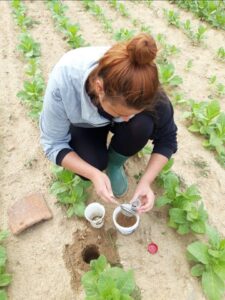 Summary: Soil is the base for food production, so its contamination with heavy metals is a serious problem for agricultural production. Soil is one of the most important reservoirs of biodiversity – it maintains its quality and ensures the survival of agroecosystems. Due to the ability to accumulate heavy metals, as well as the sensitive nature of the smallest changes in the environment, the invertebrate terrestrial fauna is a useful indicator for assessing the quality of the soil and the health of the agroecosystem. The aim of this project is to make an assessment of biodiversity, as well as to evaluate the effects of soil pollution on invertebrate fauna in agroecosystems in the Pelagonian region.
First report: Our research is focused on the fertile Pelagonian plain, on whose soil several field activities were carried out in the past period. The data obtained so far is the result of the teamwork of our small group of enthusiasts and advocates for the protection of biodiversity and the environment. We skillfully used data on species diversity, structure, composition, size, monthly dynamics of invertebrate populations as well as their sensitive nature to changes, to construct a picture of soil quality, the general health status of agroecosystems and their functioning. We look forward to completing the remaining field and laboratory activities and sharing the final results with you on the importance of terrestrial invertebrate fauna and its impact.
2. Testudo hermanni and Testudo graeca – The only tortoises from the Gazi Baba Forest Park
COORDINATOR: Dario Stojanovski
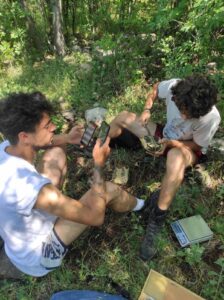 Summary: Skopje Park – Gazi Baba Forest is home to two species of land tortoises: the mountain tortoise (Testudo hermanni) and the field tortoise (Testudo graeca). The goal of the project is population research of turtles from the park – Gazi Baba forest. The research directed towards the realization of the set goal has a scientific and educational aspect. The scientific aspect – by collecting and analyzing the data obtained from field activities, to expand the knowledge about the population of turtles, specifically their distribution, ecology and behavior. Educational aspect – familiarizing the general public with the biology and ecology of the turtles that live on Gazi Baba and their significance for the park and beyond.
First report: In recent months, our team has carried out 25 exciting field surveys in the Gazi Baba Forest Park – the forest island in the heart of Skopje. The park-forest is home to two species of land turtles: the mountain or forest turtle (Testudo hermanni) and the field turtle (Testudo graeca) and provides ideal conditions for a population study, as the ecosystem abounds with favorable habitats for the target group of our study – the turtles. Every individual turtle we managed to capture was weighed, recorded, tagged and released. A total of 515 turtles were caught and processed, of which 418 were mountain turtles and 97 were field turtles. According to our preliminary analyzes in the Gazi Baba forest park, it is estimated that the population of the mountain turtle is about 995 individuals, and the field turtle 175 individuals.
3. Diversity of aquatic and saproxylic arthropods in the riparian and aquatic ecosystems of the Shar Mountain (Aqua-Shar)
COORDINATOR: Sandra Slaveska
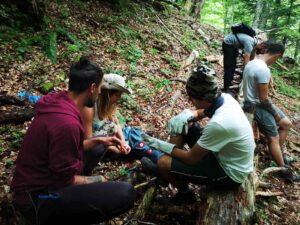 Summary: In terms of biological diversity, the future protected area NP “Shar Planina” needs the addition of databases for different groups of organisms. The goal of this research is to get an idea of the ecological status of the riparian forest and water ecosystems, through the valorization of the diversity of saproxylic and aquatic hardy birds. These representatives of the hardwing fauna have a bioindicative significance for the ecological status of certain habitats. The results of the research would be of particular importance in the creation of future strategies and plans for the management of the protected area, as well as the enrichment of the national database on the diversity of the targeted hardwing fauna.
First report: The new Shar Mountain National Park is an interesting research area for us young and enthusiastic ecologists. The late snows were a big challenge for us to get to one of our locations – Karanikoličko lake, but no matter how challenging it was, for our adventurous spirit and desire to explore it was no problem to collect material from the lake. Along the way, we also encountered some very interesting representatives of the saproxylic hardwings that were still in the larval stage which makes them even more interesting, as we rarely get the chance to see them in the early stages of their life cycle in their native habitats. The work so far is going well, it’s fun for us to work and we expect successful laboratory analyzes and significant results in the future.
4. The influence of different climate types in R. S. Macedonia on the abundance of Bacillus isolated from soil
COORDINATOR: Sofia Kostandinovska
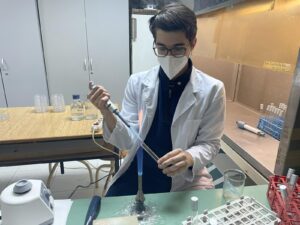 Summary: Soil microorganisms play a major role in the biogeochemical processes of various elements that are vital for plant growth and animal life. Understanding and predicting the impact of climate change on soil microorganisms and their role in the ecosystem represents a great challenge and an opportunity to direct research efforts to one of the most urgent problems facing our planet. The project will investigate the influence of climate types on the number of Bacillus spp., and with the obtained results it will be possible to indicate potential ways in which microorganisms can be used to reduce the negative consequences of climate change.
First report: Global warming is causing changes in the populations of soil microorganisms, so microbiological research is becoming more important for environmental conservation. It is with great pleasure that we participate in starting a new research trend in the field of microbial ecology for the first time in RS. Macedonia by examining the number and distribution of Bacillus spp. in function of the organic carbon of soils of the different climate types in our country. We determined a decreasing trend in the number of soil microorganisms with increasing temperature and successfully isolated 36 strains of Bacillus, 6 of which showed antimicrobial activity that can further find wide application. Understanding the basic ecology of microorganisms and their effects on the environment has allowed us to identify the harmful impact of climate change.
5. The natural enemies of pests in the oak forests of Jablanica mountain
COORDINATOR: Blagoj Shurbevski
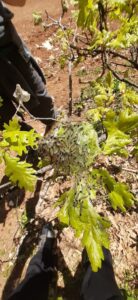 Summary: The main goal of the proposed research will be the influence and natural population regulation of insect species that cause damage in oak ecosystems and disturb the biological balance in them, in the area of Mount Jablanica. Vital oak forests are of inestimable ecological importance to all organisms that depend on them for survival. With the help of combined field and laboratory tests, we will determine the qualitative composition and population density of the “pests” and the invertebrate species that are their natural enemies. In the future, the obtained information will be able to practically serve in the integrated protection of forests, especially in the area of biological control.
First report: Our team spent the initial phase of the realization of this project with intensive field activities. The late frosts and snow that remained in some localities from the Jablanica mountain until the middle of April caused a delay in vegetation and the appearance of insects. With that, the time interval for field work was shortened, and the intensity increased. From the field research, we determined that the most common types of insects – the causes of damage to the oak are the species: Tortrix viridana and Lymantria dispar. In addition to them, we also observed species from the order Coleoptera, Hymenoptera, Diptera and other species from the order Lepidoptera whose samples will be subject to additional laboratory determination. According to the initial assessment, we can say that the health condition of the oak forests of Jablanica is at a satisfactory level, except for the damage caused by man.
6. Subterranean fungi in Macedonia – distribution and ecology in certain areas
COORDINATOR: Angel Tanevski
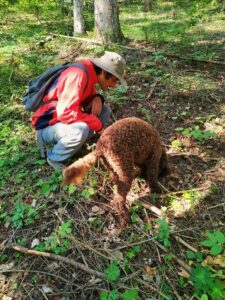 Summary: Subterranean fungi are an important element of the ecosystem. Many genera are mycorrhizal and play a significant role in the functioning of forest ecosystems. The diversity of underground fungi in Macedonia has been studied since ten years ago, but despite that they are still understudied. The geological diversity and the effects of different types of climate in Macedonia enable the presence of rich biodiversity and suitable ecosystems for the development of underground fungi. In this project, field research will be carried out in under-explored localities, with the aim of obtaining new knowledge about the diversity of underground fungi, about the diversity of mycorrhizal partners, and potentially discovering new species.
First report: In search of the hidden treasure beneath the forest floor… No, it’s not about gems, it’s about the world of subterranean fungi. In Macedonia, underground fungi are insufficiently studied, and within this project it is planned to investigate already known and new localities, with the aim of finding existing and potentially new species. From March to July, 7 field surveys were carried out at 6 different locations in Macedonia, during which about 40 specimens, i.e. 13 species, belonging to 9 genera were registered. With this project, for the first time in Macedonia, the species Elaphomyces aculeatus was discovered, which is proposed for the Global Red List of Fungi (IUCN), as a critically endangered species, because it is registered only in Europe, in less than 50 localities. In the period that follows, we expect even more exciting field research, and even more interesting findings.
7. Distribution and ecology of the black widow (Latrodectus tredecimguttatus) in Macedonia
COORDINATOR: Martina Trajkovska
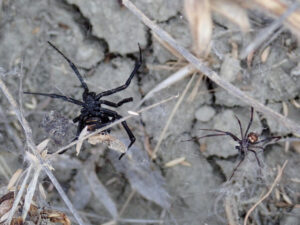
Summary: This project represents the first systematic attempt to study the black widow (Latrodectus tredecimguttatus) in Macedonia. Due to a lack of data on its distribution and ecology, the black widow is not on any list of protected species. The critical analysis of the entire literature, followed by field and laboratory activities will result in new knowledge that can contribute to taking measures for the future protection of this species.
First report: The subject of interest of this project is the black widow (Latrodectus tredecimguttatus), which is considered one of the most poisonous spiders in the world. Its exact distribution is very poorly researched, not only on the territory of Macedonia, but also on the entire Balkan Peninsula. Until now, no comprehensive study of this species has been conducted in Macedonia. Our preliminary results showed that the black widow is distributed in small and fragmented populations exclusively in the most arid regions of Macedonia. Communication/education with the local population, medical and military personnel was also achieved. The obtained data will be a scientific basis for future studies and taking conservation measures.
8. Distribution and abundance of the European Roller (Coracias garrulus) in the flats of the Skopje Valley
COORDINATOR: Ana Nikolovska
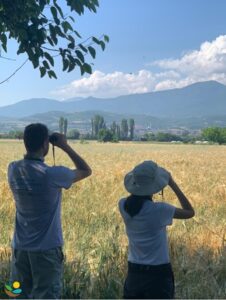 Summary: The current data on the distribution and abundance of the European Roller (Coracias garrulus) in the Skopje Valley are not based on a systematic study, but are the result of unpublished observations by experts in the area. Hence the main goal of the project, which is a contribution to the knowledge about the representation and size of its population in the basin. If sufficient data is collected with the realization of this project, they can serve in creating initiatives and plans for the protection of certain areas of natural value.
First report: The European Roller is a migratory bird that nests here only in the summer months. This species nests in prepared holes in trees that are usually made by woodpeckers, requiring the trees to be close to open areas where the birds can easily hunt. Hence the specificity of the locations selected for observation and research of the blue heron. Its representation and number in the Valley is not sufficiently known, and this research will contribute to the knowledge of the representation and number of blue crows in the Skopje Valley, which in turn contributes to enriching the existing data on the avifauna in the Valley. So far, seven field activities have been carried out and as many as 28 territories have been discovered. Motivated by them, we expect even more territories and data of great importance for the representation and size of the population in the valley.


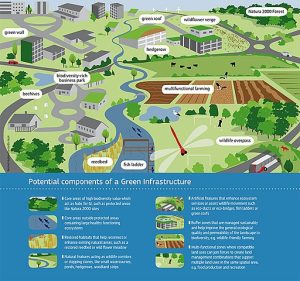 Green Infrastructure is a strategically planned network of natural and semi-natural areas. Green Infrastructure (GI) plans the use of space in a way that protects nature and decreases the fragmentation of natural areas. Although areas are protected with measures of protection, Grean Infrastructure is mindful of their connection. GI takes into account the different elements that are important for the functioning of a green area – from the free flow of water and resources, to the free movement of animals. The protection of an area is insufficient if outside of the area of protection infrastructure projects are built that prevent the flow of water and the movement of animals. This type of fragmentation is one of the biggest threats to the protection of the environment.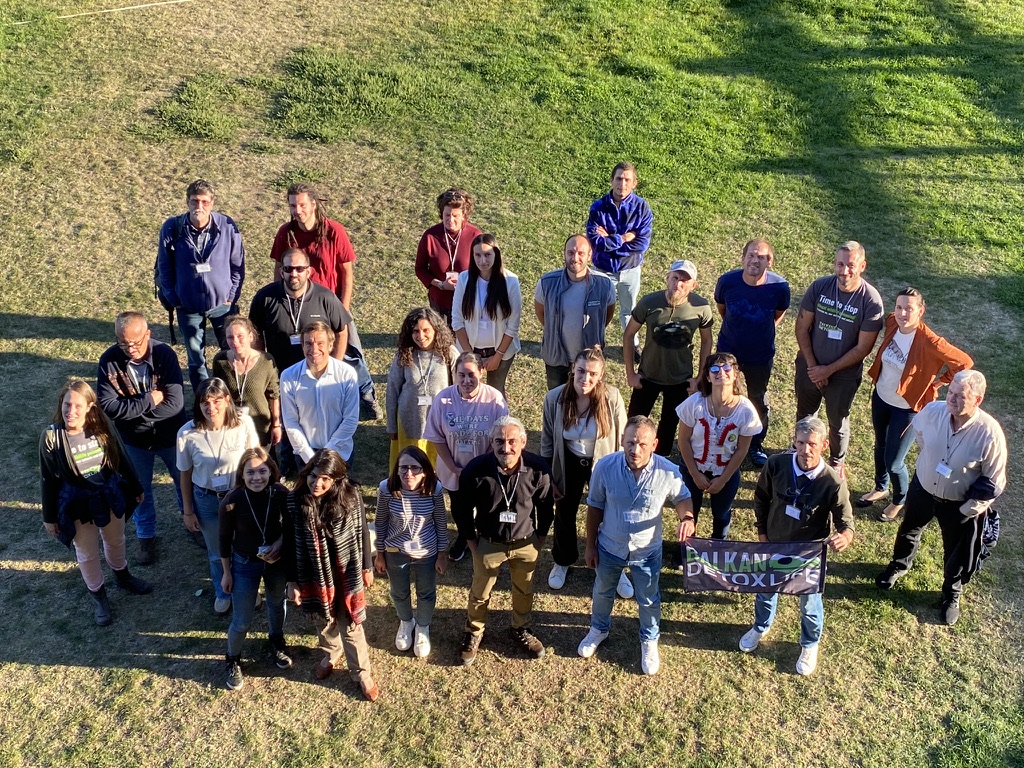
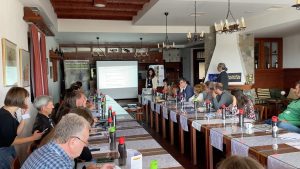 At the end of October 2022 we provided logistical support and ensured that representatives from the relevant institutions participated on the Regional Workshop on Mobile Pastoralism and Vultures alongside relevant stakeholders. The workshop took place in Popova Kula, Demir Kapija. The 3-day event was collaboratively organized by Yolda Initiative, Vulture Conservation Foundation, EuroNatur and the Macedonian Ecological Society, with the funding provided by the MAVA Foundation and from the LIFE Programme of the European Union within the framework of the BalkanDetox LIFE project. In total, 32 individuals from 11 different countries participated.
 The second day focused more on the relevant policy and legal frameworks that are applicable for traditional mobile pastoralists. Vyara Stefanova gave insight on international policies as well as the EU common agricultural policy (CAP), and discussions ensued on the pros and cons of this policy with various opinions stated. The implementation of EU sanitary regulations was also covered. Esmeralda Laci then gave a presentation concerning the ongoing process of Albania’s case of having traditional mobile shepherding be recognized and proclaimed as an intangible cultural heritage by UNESCO.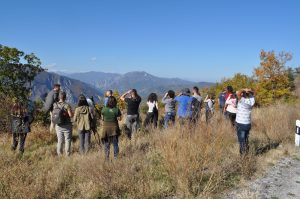

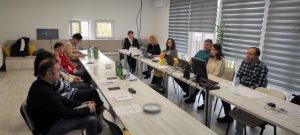 Proper planning of space and land use is essential for the maintenance and development of Green Infrastructure (GI) and all its benefits. In order to promote the concept of GI and to see how it is incorporated and implemented in our national and in EU legislation, we held the first training for GI with key stakeholders connected to spatial planning and nature protection. The participants in this training were representatives from the Ministry of Environment – Department of Spatial Planning and department of Nature Conservation, PE National Roads, Faculty of Architecture, Faculty of Forest Sciences, Faculty of Natural Sciences and Mathematics, as well as consulting companies and NGOs that work in the field of environment protection and spatial planning (Farmahem, Maneko, and Ursus Telea).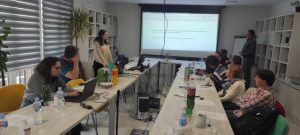
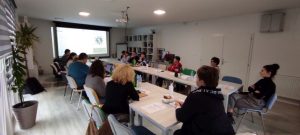
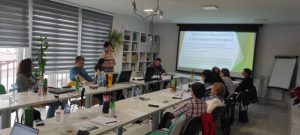


 30.09.2022 – Over 30 representatives from the non-governmental sector, international organizations and donors met on September 28 at Popova Shapka to discuss the potential for cooperation in the Shara-Korab-Koritnik region. The purpose of the round table was to exchange information on current projects in the region and to initiate synergies in order to improve regional sustainable development in this mountainous region.
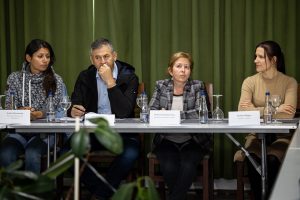 According to the director of the national park, Ibrahim Dehari, the park, as the youngest institution, has a lot of challenges ahead of it.
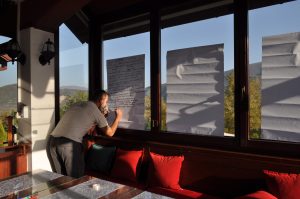
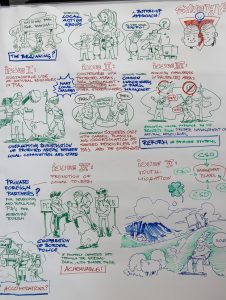
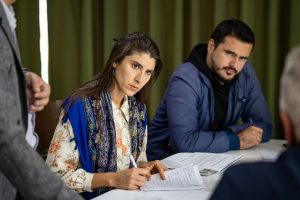 The discussions showed that meetings of this type need to be organized more often. Current problems affecting the local population such as youth migration, lack of workforce in animal husbandry and similar challenges were part of the discussions. In addition to the donors, the representatives of the local action groups in the three countries participated in this meeting as one of the main drivers for cross-border cooperation. Within the framework of the meeting, the illustrator Zdravko Girov tried to convey and visually present some of the problems and challenges present in the region.
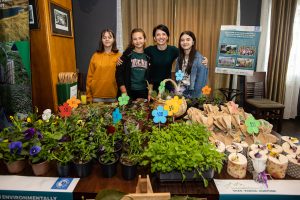 29.09.2022 – In September, the representatives of 14 model projects from Kosovo, Albania and North Macedonia supported by the project “Sustainable future for the Shara-Korab-Koritnik region” presented their work at the regional fair that we organized in Popova Shapka in cooperation with the foundation Euronatur from Germany as well as the project partners PPNEA from Albania and CNVP from Kosovo.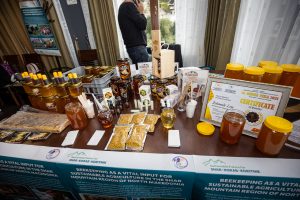
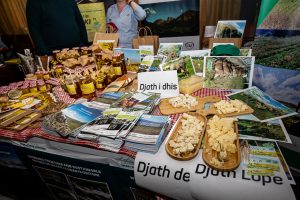 The organizations Wild Iris, Mountaineering Club Ljuboten, Center of Education and Development and Initiative for Civil Integration are involved in the realization of the model projects from North Macedonia. Within the framework of these projects, support is given to beekeepers, livestock farmers, tourist offers and infrastructure are developed, and young people from the region are educated on the cultivation of aromatic and medicinal plant species.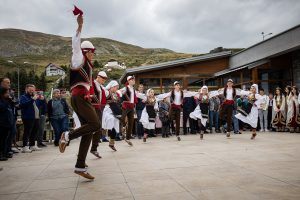

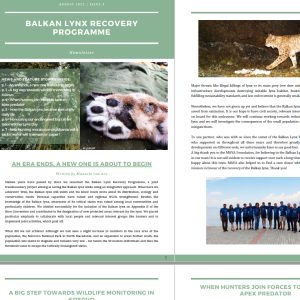 The Balkan Lynx Recovery Programme Newsletter is a publication which promotes the most important news and achievements of all partners involved in the Programme. This issue covers news surrounding the implementation of the Programme; advances made in researching wild animals in Kosovo; the contribution that hunters make to the Programme; personal stories from our colleagues as well as the most important events and national changes to nature conservation.