1. Microbial biofungicides as an alternative for biological protection of plants (MICROBIOFUN)
Coordinator: Sofija Kostandinovska
Context
Macedonia, as a developing country, relies on agricultural crops production and to increase yield promotes use of, pesticides and organic fertilizers that cause irreversible damage to agricultural lands and surrounding ecosystems. In addition, Macedonia has a large portion of contaminated soils from the heavy, chemical and mining industries (Dimovska et al., 2017). These soils are known sources of antimicrobial strains, because they are adapted to an environment with a low percentage of nutrients, and a high rate of competition between microbial members (Ivanova et al., 2015). Accordingly, Macedonia is an excellent potential source of biofungicides, but since oir knowledge on biofungicides is limited, so is their use in the creation of biopreparations (Kungulovski et al., 2017).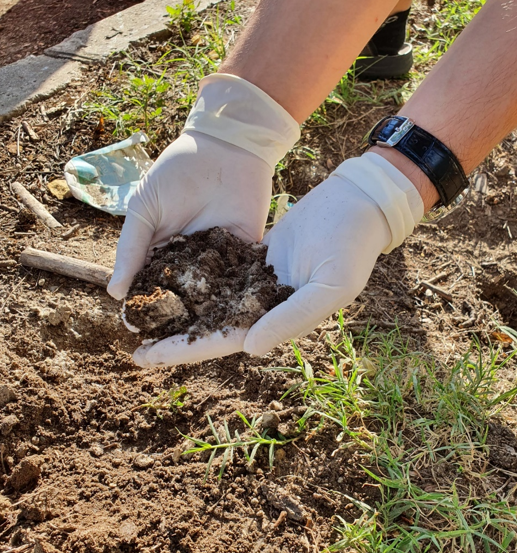
General methodology
Во текот на реализацијата на проектот се користи стандардна методологија која веќе се спроведува во Микробиолошката лабораторија (Yilmaz et al., 2005; Gebreel et al., 2008), како определување на влага и рН, бројност со користење на pour plate методата, изолација со метод на потег и скрининг со дифузионен метод.
The implementation of the project will use standard methodology already used in the microbiology laboratory (Yilmaz et al., 2005; Gebreel et al., 2008), such as moisture content and pH determination, enumeration using the pour plate method, isolation using the streak method, and screening using the diffusion method.
Aims and research questions and accompanying results
The aim of the project is to investigate the potential of indigenous microorganisms in the control of phytopathogens.
- Contaminated soils have more antimicrobial strains.
80% of the total number of isolates were from contaminated soils.
- The prevalence of antimicrobial isolates is highest in autumn.
Contrary to the expected results, we obtained the lowest number of antimicrobial isolates from the soils in autumn (30), while the highest number was observed in winter (82 isolates).
- The total number of bacteria is higher in contaminated soils.
The highest number was found in REK (1567000 CFU/g) in the summer season and the lowest number in Bucim (2310 CFU/g) in spring.
- Antimicrobial strains inhibit the growth of test phytopathogens.
Antagonists 85, 86, 87 and 88 stand out by forming the largest zones of inhibition against phytopathogens.
Contribution to science
The microbial ecology of the contaminated ecosystems of North Macedonia is an under-researched topic outside of human safety regulations. Few data are available, and there is a great opportunity to obtain breakthrough results that would influence the ecological and biotechnological perception of North Macedonia. Such findings would serve to initiate and conduct future scientific research projects.
Conservation importance
The conservation value and scientific contribution are closely linked. Through data of this nature, insight into the potential of the marker for Macedonian biofungicides is possible. The market entry of such products and the displacement of classical pesticides would be of inestimable importance for the protection of the environment and for the progress towards a more sustainable agriculture.
2. Evolution or phenotype plasticity in Cyclotella cavitata – the answer to ecological changes in the Ohrid Lake during the Quaternary period
Coordinator: Dushica Zaova
Context
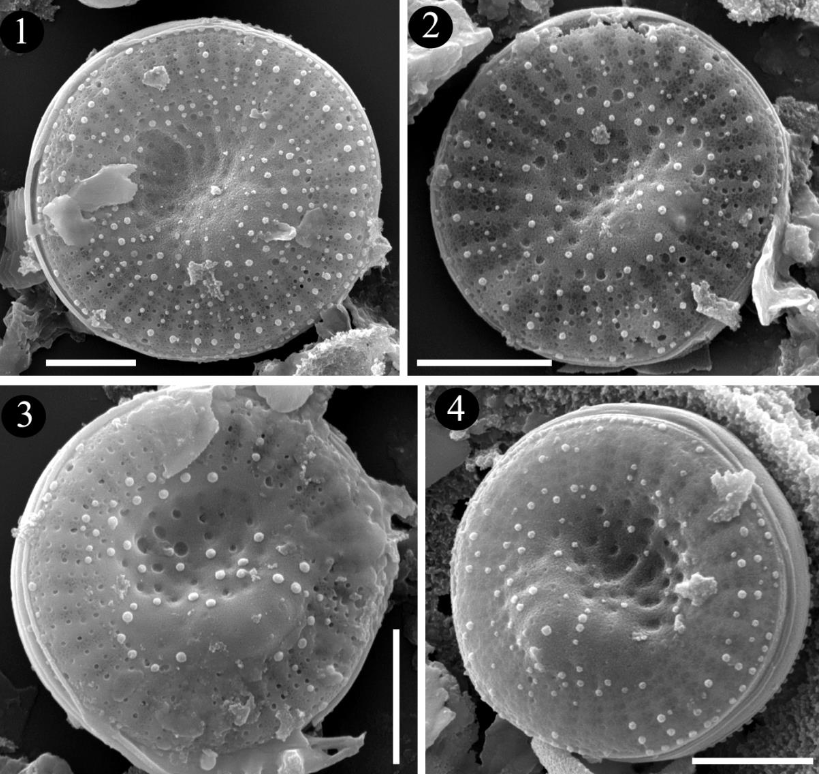
The endemic diatom species Cyclotella cavitata has persisted in Lake Ohrid during the Quaternary period, known for numerous dynamic and intensive climate changes (Pellans & Gibbard, 2012). During the same period, the lake experienced other significant environmental changes driven by ontogenic processes such as subsequent deepening, leading to alterations in mixing processes, trophic state, and nutrient availability (Wilke et al., 2020). However, the extent to which these combined changes influence the species C. cavitata and its response remains unknown. Has the species developed mechanisms for survival to this day, and can these mechanisms help us predict its reaction to similar scenarios in the future?
Aims and research questions
*Determining the origin of Cyclotella cavitata?
* Does Cyclotella cavitata found a mechanism for survival during the
Quaternary?
* How Cyclotella cavitata responded to the climate changes?
* Can we recognize evolutionary events from the species morphological
variability or were the responses only ecophenotypic?
*Does climate influence the temporal existence of morphologies?
Methodology
Permanent slides from Lake Ohrid sediments up to 1300 кa were used for studying the species C. cavitata. Statistical analyses were performed in R to determine the morphological variability of the species. Statistical analyses in Canocco 5, C2, and Tlia were used to track possible morphotype-environment relationships.
Results
А continuous existence of the species C. cavitata during the period 1100-150 ka has been found. Detailed morphometric analyses reveal significant and permanent phenotypic variations with an irreversible character, suggesting evolutionary processes within the species. These processes were driven by local ontogenetic changes within the lake as well as global climate shifts. Generally, less intense climate cycles contributed to diversification of new morphologies without causing the disappearance of previously established ones. However, intense climatic changes resulted in morphological diversification of new taxa but in addition a extinction of previously formed morphologies was observed.
Contribution to science
The scientific contribution is recognized in the uniqueness for studying continuous and long-term evolutionary trends in endemic diatom species. This is possible because of the 1300 ка long and undisturbed sedimentary record of Lake Ohrid and the continuity of the existence of the living world in it.
Conservation importance
One of the basic requirements for adequate protection of an ecosystem is understanding its uniqueness. Therefore, knowledge about the origin and evolution of endemic species can further highlight the value of Lake Ohrid as a habitat with greatest endemic diversity. This can contribute to more adequate protection of this unique ecosystem.

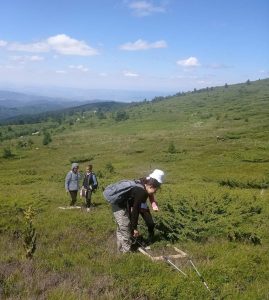
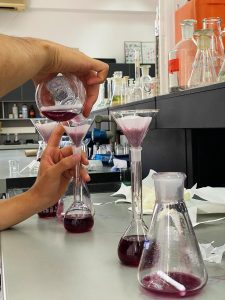 Summary: Blueberries in Macedonia represent significant natural resource that provides additional income for number of people. However, the systems for collection, licensing, control and monitoring are still not well developed in most of the Republic of North Macedonia which puts pressure on natural habitats and wild species and leads to unsustainable use. The aim of this project is to assess the economic potential based on sustainable usage of bilberries (Vaccinium myrtillus – European bilberry and Vaccinium uliginosum – Bog bilberry) on Kozuf Mtn., by intensive field assessment of annual production of fruits and leaves along with chemical characterization and analysis of the importance of bilberries for local population.
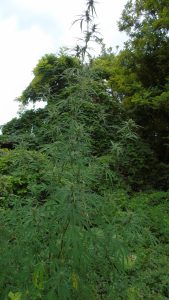 Summary: Scientific interest in cannabis (Cannabis sativa L.) has grown exponentially in the last 30 years due to the discovery of beneficial phytochemicals along with the study of the human endocannabinoid system. Accordingly, changes in legislation were initiated to legalize the use of cannabis for medical purposes. Cannabis is a plant that was previously cultivated as an important industrial plant but can also be found as an autochtonous plant in North Macedonia. The purpose of the study is to investigate whether there is autochtonous cannabis in Macedonia and whether it is of commercial value, through localization of the areas where it grows, collection of
 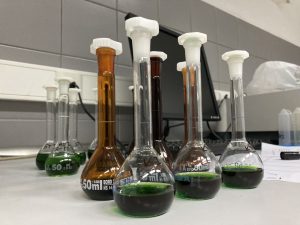 plant material, and its morphological and phytochemical characterization. The obtained results will be properly disseminated and will contribute to the valorization of this plant and the development of awareness of the existence of indigenous cannabis in N. Macedonia, its importance and how to change the practice of its intentional destruction to its preservation.
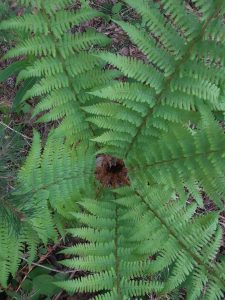 Summary: Dryopteris is a cosmopolitan genus of ferns, which includes species with diverse habitat ranges and morphologies. Hybridization and apomixis are the main reasons for the origin of some species, morphologically separated by fine discrete characters (Fraser-Jenkins, 2007), which make the identification process particularly difficult. The project will provide data on the distribution and diversity of the genus Dryopteris on Kozhuf Mountain, through analysis of the morphological characteristics of the species and through analysis of the ornamentation and dimensions of the spores. This research is a continuation of two decades of efforts to confirm the presence of species and the published data on the genus on а national level (Melovski, 2016), where data on Drypoteris on Kozhuf were not included. This project is also a continuation of the taxonomic research of one of the most complex genera of ferns in Europe.
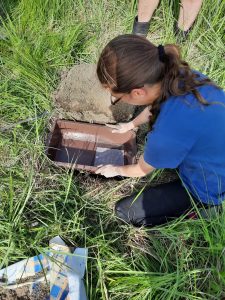 Summary: Wet meadows in Prespa are important ecosystems with specific biogeochemical processes that provide numerous ecosystem services: water purification, nutrient and mineral retention, carbon sequestration, rich biodiversity, etc. The main threats to these habitats come from agricultural activities, mainly through the transformation of wet meadows into arable land. The project will carry out experimental research in which the main focus will be the role of
 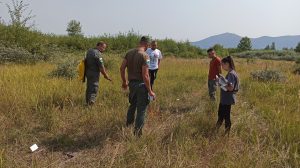 wet meadows in retaining nutrients and heavy metals from fertilizers used in agricultural production. In this way, the role of these habitats to serve as a filter for these substances that reach Lake Prespa will be emphasized, and thus the need for their appropriate management and protection in the protected area Nature Park “Ezerani”.
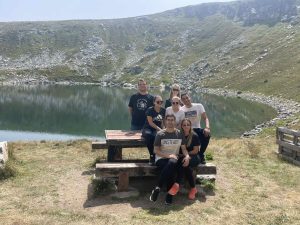 Summary: National parks represent particular sanctuaries for natural wonders which must be protected from the pernicious effects of humankind. This is achieved by constant monitoring of all described and valorized bio-geological resources. Thus, evaluations are required of all the macro-microscopic elements of these ecosystems. The “eyes of Pelister” are glacial lakes with little to no data regarding their microbial ecology.
 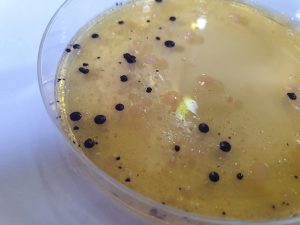 Microorganisms, members of these glacial ecosystems, hold key positions in the numerous biological and ecological processes (Liu et al., 2017; Liu et al., 2019). Glacial lakes are the most vulnerable elements of the biosphere, under constant erosion due to global climate changes (Jiang et al., 2019). The proposed project aims towards evaluating the heterotrophic microflora of these natural wonders, including potential anthropogenic contaminants, as functions of the physical parameters of the water and the seasonal variance in ecotope. The analysis of these unique lakes is of imperative magnitude in order to evaluate the vulnerability of these invaluable ecosystems.
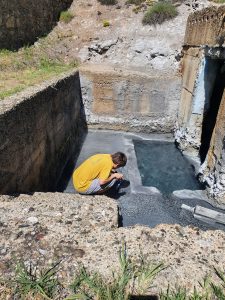 Summary: Natural mineral and thermal springs are an underexplored wonder of invaluable eco-cultural value (Gorgieva and Popovski, 2007). These spring are often subject to extensive anthropogenic exploitation. Meanwhile, insignificant attention is allotted to the biodiversity of these natural treasures. Additionally, the degree of anthropogenic damage inflicted is seldom discussed outside the legislative limits of allowed contaminants. The goal of this project is to enact a thorough microbiological analysis of the mineral springs at Negorci, Proevce, Katlanovo, Stip and Debar. These particular geothermal-mineral springs represent
 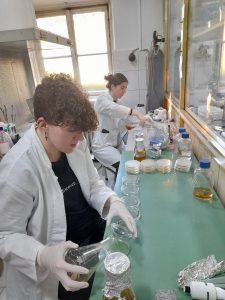 notable cultural objects under intensive local usage. Ecologically there is currently great interest in the study of microorganisms that are able to live in extreme environmental conditions such as high temperatures and mineral concentrations. In addition, very little information about autochthonous microorganisms inhabiting such thermal waters presently exists in N. Macedonia (Sagova-Mareckova et al., 2021; Hui et al., 2021). The results may serve as specific pioneers for the category as well as cause for future conservation attempts.