Category: News

  • Initial BLRP 4 partner meeting

    Initial BLRP 4 partner meeting

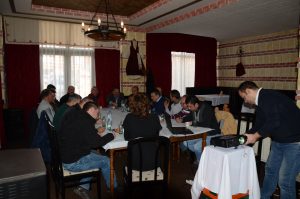
    Balkan Lynx Recovery Programme representatives held their initial partner meeting on from 4-11 March in Prizren, Kosovo. The meeting was attended by all partner organisations from the region working on Balkan lynx protection. During the meeting, discussed were the strategies to be addressed within the project, as well as the results from the latest project activities.


  • Annual meeting of members involved in Osogovo wildlife monitoring

    Annual meeting of members involved in Osogovo wildlife monitoring

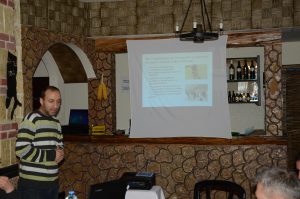
    Results of the current monitoring in Osogovo were presented in the meeting. Additionally, the Strategy for the Monitoring Network of Osogovo Mountains was reviewed. Cooperation between MES and local partners involved in the monitoring has yielded positive results, such as: increased collection of information for the current state of predator and prey, training for the use of appropriate methods for monitoring and exchange of information, and expert advice. These results enhanced the mutual cooperation and trust which initiated the establishment of a monitoring network. MES prepared a draft document of the Strategy for the Monitoring Network of Osogovo Mountains, which was presented, collectively reviewed and adopted at the meeting.

  • GIS training of BLRP partner organisations

    An intensive training course for the project partners within the Balkan Lynx Recovery Programme on basics of geographical information systems and cartography took place from 14-16 December 2016. The training, held in the premises of PPNEA, in Tirana, was implemented by the Macedonian Ecological Society, and attended by three PPNEA members and two members of ERA from Peć, Kosovo.

    Four presentations were given at the beginning of the training, with the major section consisting of demonstration and practical work by participants on numerous selected GIS aspects deemed crucial for the Programme (georeferencing, transformation of geographical projections, digitalisation, data display and labelling, map preparation, etc.). In addition, participants were acquainted with the use of several applications intended for mobile devices and their application in the field. In that respect, participants were trained on advanced use of GPS, database setting for mobile devices depending on individual needs during field research, adaptation of “external” data into GIS format, etc.

    In the course of the training ArcGIS, QGIS, Microsoft Excel, and Google Earth and other Windows software packages were used, as well as the Android mobile applications Oruxmaps, MEMENTO Database, ES File Explorer, and Mapfactor Navigator.

  • How to turn your mobile phone into a GPS navigation device?

    Recognising the value of previous workshops and the importance of a monitoring network, the MES team involved in the Balkan Lynx Recovery Programme organised another training with network members. The topic of the meeting was ORUXMAPS – a free mobile application for Android users that is easy to use. With the help of the application, more precise information were acquired on lynx sighting, traces, prey, and also on other predators in the surrounding areas.

    The workshop was attended by a group of 20 members mainly consisting of hunters, foresters, and veterinarians. It was held in the city of Tetovo on the 7 October 2016. After the instructions were given, the software was installed on participants’ phones together with a memory card consisting of topographic maps for the purpose of better orientation. Following the introduction, the participants then had a chance to test out the application. In the second part of the workshop the members were presented with the fourth stage of the Balkan Lynx Recovery Programme and what their roles would be in future recovery efforts.

  • Meeting with the members of the Balkan lynx monitoring network

    Meeting with the members of the Balkan lynx monitoring network

    The Balkan lynx team on 10 June organised their regular annual meeting with members of the monitoring network, which is also the last one in the third phase of the Balkan Lynx Recovery Programme (BLRP). The event took place in Vevchani on Mount Jablanica, where last winter an opportunistic camera-trapping session and a lynx GPS-collaring operation took place. Participants mostly included hunters and game wardens active within the home range of the Balkan lynx, with somewhat lesser number of veterinarians, farmers and reporters.

    Programme content and meeting goals aimed at highlighting the benefits from cooperation between the lynx team and members of the monitoring network resulting in a successful camera-trapping session on Mount Jablanica. Results from the session along with the remaining relevant BLRP 3 activities were presented and discussed. Following the presentation, monitoring network members expressed their concern and pointed out the problems which lately seem to be the upswing – clearcut logging and habitat fragmentation ensuing from the constructions of the new highway Gostivar-Kichevo-Ohrid; and deployment of traps by poachers, which are unselective, thus being able to trap any animal larger than hare, and lethal too.

    Before the conclusion of the meeting a training workshop was announced intended for the members of the monitoring network concerning the use of a free software for the purpose of monitoring the Balkan lynx and its prey. The workshop will probably take place during project’s next phase.

  • Training for identification of bird species and their migratory patterns

    The Mountaineering Club “Bigla – Ilinica” organized their final activity as a part of their microgrant “Falling in Love with Birds” financed by the project “Capacity Building For Flyway Conservation in the Mediterranean”.

    The two-day activity consisted of workshops with participants from their own club (the youngest members of the mountain hiking club) – in and outside the classroom – by identifying bird species and learning about their migration.

    By visiting the Belche wetlands, participants had a chance to learn how to use binoculars and develop their birdwatching skills – by identifying differences in physical form, sound, colour, habitat and particular behaviour.

    Following afterwards was learning the taxonomic differences of the species through memory and association-based games. Additionally, with the goal to understand bird migration, participants played a game called “Bird Migration and its Challenges”.

    Finally, there was great interest expressed by almost all participants in having similar events organised within the future, which would include different taxonomic groups.

  • Extending knowledge on the Balkan lynx for schoolchildren in the Mavrovo National Park

    Cooperating with teachers from the primary schools of Mavrovi Anovi, Rostushe, Trebishte and Velebrdo, MES implemented educational activities on the Balkan lynx. The goal was to improve and extend knowledge in children on this threatened species. Around 280 children aged 6 to 14 took part in these activities.

    The three activities contained and organised into an interesting educational package complemented each other in order to create a complete and clear picture about the Balkan lynx. Activities took place in the course of the two subsequent visits to each school in May. Presentations offered every child the opportunity to learn more about lynx biology and ecology, so that afterwards, using the printed material, they could test their knowledge through fun.

    Results and experience from the undertaken activities have shown that children recognise this animal as a rare and threatened species to Macedonia and have shown great interest in future joint activities in MES.

  • Project Implementation Workshop

    A one-day workshop for successful implementation of project was organised on 27 May 2015 in the Goce Delchev Primary School – Demir Hisar. The workshop was organised as a part of the activities for strengthening the capacities of the local partner organisation from the Ilinska and Plakenska Region. There were 12 participants from 7 different organisations, which are currently running projects in the frame of the Small Grants Programme on Ilinska and Plakenska Mountains.

    The main goal of the workshop was to train the participants to successfully implement the visions and the plans foreseen in the project proposals. The participants were introduced with the two topics related to project implementation: the phases of the project implementation (Activation and Functioning) and the 5 control factors for project management.

  • Fourth deterministic camera-trapping in Mavrovo National Park

    In the period 15 March – 13 May 2015, MES, in cooperation with the Mavrovo National Park, conducted the fourth deterministic camera-trapping study within the territory of the Park. Main goal of the study was to estimate the number and the density of the Balkan lynx population in the Park, as well as to see the population trend by comparing the results with the ones from the previous three studies. There were 60 camera traps installed at 30 different locations. Camera traps were checked every 10 days for battery and memory card replacement.

    We got 37 photos of Balkan lynx from 11 different locations in the Park. There is plan to make population estimations by the end of June 2015. Apart of Balkan lynx, we got many photos of the other large mammalian species present in the Park.

    During the study, MES team had great help from the employees of Mavrovo National Park in choosing suitable sites, and deploying and controlling the camera traps.

  • 6 May is Stork Day in Cheshinovo-Obleshevo!

    The youth of the Municipality of Cheshinovo-Obleshovo celebrated Stork Day on 6 May with educational games on stork migration and art workshops. Furthermore, the Municipality has decided to continue celebrating Stork Day in the future by organising annual celebrations within the municipality.

    So far, MES has organised educational activities throughout the schools in the municipality and hence has encouraged children to explore the life of the stork, which stands as a symbol of their area. As a result, the children from these schools were also the first to participate in the stork-related celebrations.

    The activities to be implemented by MES and the Municipality of Cheshinovo-Obleshevo until the end of the school year will provide initial information about the number and density of stork nests as well as their feeding and nesting grounds. In the course of the field research, MES is planning to collect folk traditions and songs inspired by the stork.