Category: Blog

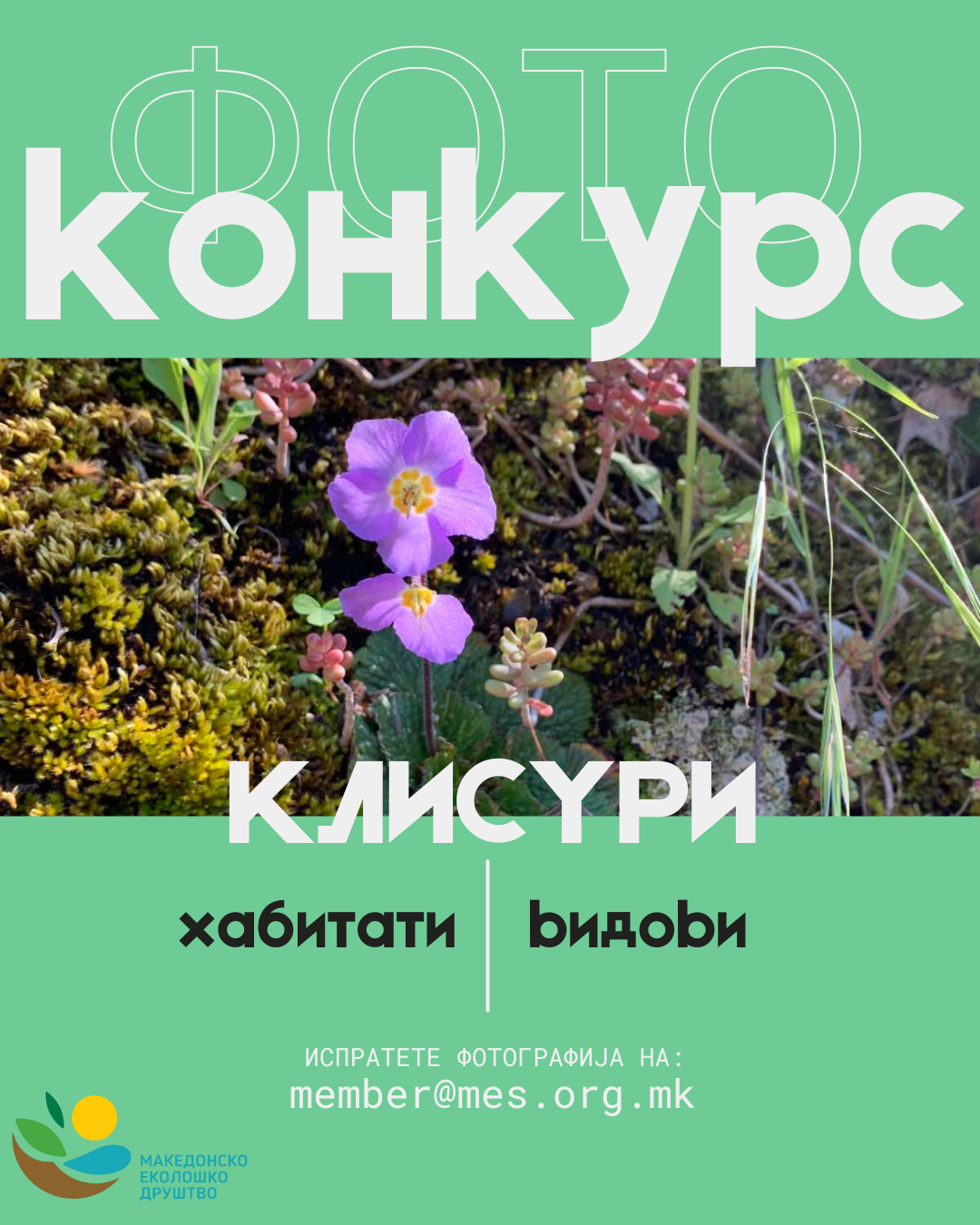
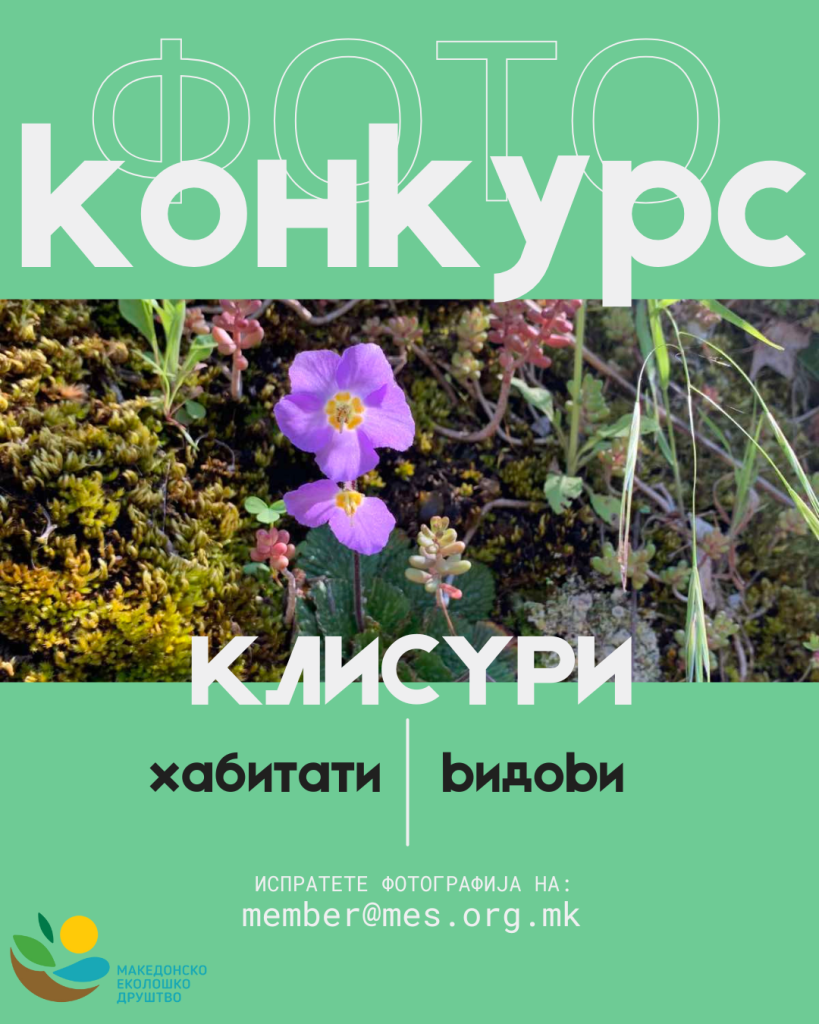
  • Gorge Photography Contest

    Gorge Photography Contest


    The
    competition is open from May 14, 2025, to September 30, 2025.

    Eligible Photographs
    To be accepted into the competition, photographs must depict habitats or species captured in gorges in Macedonia.

    Jury
    The jury consists of employees of the Macedonian Ecological Society (MES) and members of the Assembly. The jury will anonymously review all submitted photographs.

    The jury will select 12 winning photographs. All selected photos will be used in the design of the MES 2026 Calendar.

    Winner Announcement
    The winners of the competition will be announced on November 1, 2025, on the MES website and relevant social media platforms.

    General Rules
    By submitting a photo to the Macedonian Ecological Society’s Gorge Photography Contest, you agree to the following:

    • You are the sole owner of the photograph and hold all rights to it. No rights to the photograph have been granted to any other person, organization, company, or entity. No part of the image defames, offends, or violates the rights of any individual.

    • MES will acquire a permanent, non-exclusive, royalty-free right to use the submitted photographs for purposes related to raising the organization’s profile, promoting its work, and promoting the competition in future years. MES is a non-profit civil society organization, and your photograph will not be used for profit-making or any other commercial purposes. MES may use the photograph in full, in part, or with modifications. Your name will be credited each time the photograph is used, unless you request otherwise.

    • Your personal information will be used solely for internal purposes related to the organization of this competition.

    How to Participate
    Photographs should be submitted via email to: member@mes.org.mk

    Each participant may submit multiple photographs. If a participant submits more than one photograph, all will be considered, but no more than two photos per author will be selected.

    Photographs must meet the following criteria:

    • Must depict habitats or species captured in gorges in Macedonia

    • Minimum resolution: 2600×2600 px

    • Format: JPG

    • Must include all additional information (species name, location, and date of capture)

    • Basic photo editing is allowed (cropping, contrast, brightness, color, and intensity). The addition of elements such as logos, signatures, frames, borders, or similar is not permitted.
  • The Language of Wolves

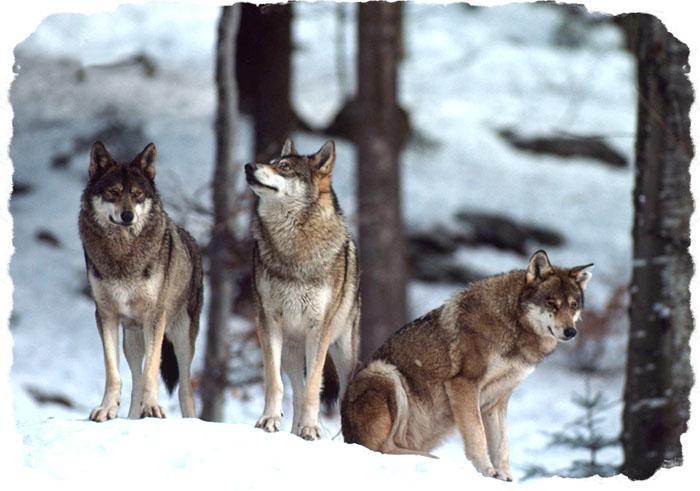
    The Language of Wolves

    Wolves, in the past, were predominantly spread across the Northern Hemisphere and adapted to a wide range of ecosystems. Today, their numbers in these areas have significantly decreased due to several reasons: the reduction of wild habitats (lack of prey for food), governmental policies from the previous century (hunting aimed at eradicating wolves), current wolf protection policies that vary from country to country, and the lack of awareness among people about wolves, which often creates fear of them.

    Wolves use three distinct languages for communication: sound (howling, barking, and growling), specific scents (urine and pheromones), and body language (body postures, movements, and facial expressions).

    When we hear a wolf howling at night, it is not howling at the moon; this is how wolves communicate with each other. They do this throughout the day, but it is most clearly heard at night due to the silence and their increased nocturnal activity. This form of communication allows wolves to connect over long distances and locate one another. Defensive howling is used to keep the pack together and to deter potential threats, especially to their pups. Barking serves as a warning. A mother may bark at her pups when sensing danger or use a bark-howling combination to display aggression in defense of the pack or territory.

    Wolves have a highly developed sense of smell, 100 times more sensitive than that of humans. They mark their territory with urine, a behavior known as scent marking. When wolves outside the pack detect this scent, they recognize that the area is already claimed by another pack. Members of a pack can also use this to identify one another, which is helpful when a pack member gets lost. Dominant wolves mark the territory as frequently as every two minutes. Wolves also communicate using chemical signals – pheromones. Pheromone sources include glands in the paws, tail, eyes, anus, genitals, and skin. For instance, a male can detect if a female is in estrus through the pheromones in her urine and will only attempt to mate with her during this period. Naturally, their keen sense of smell alerts them to the presence of enemies or food nearby.

    Wolves most commonly communicate through body language. When angry, they hold their ears upright and show their teeth. A wolf that is suspicious of another’s behavior pulls its ears back and squints. They also express fear by pulling their ears back. A playful wolf bows with its front legs and jumps in circles.

    Wolves use specific movements to establish hierarchy within the pack. The primary rule is that the pack consists of leaders and followers. Leaders are usually the parents of the other pack members and are typically the oldest, largest, strongest, and most intelligent wolves in the pack. The dominant pair is responsible for the pack. To display dominance, they hold their tails high and stand tall, while followers show submission by lowering their tails and crouching close to the ground in the presence of the dominant wolf. Active submission is often demonstrated by pups, who crawl, lick the muzzle, and tuck their tails to show inferiority. Passive submission is shown by followers lying on the ground, turned sideways or on their back. If two wolves disagree, they exhibit this through growling and baring their teeth to appear as threatening as possible. Usually, the less dominant wolf concedes before a fight begins and rolls onto its back to accept the authority of the dominant wolf.

    In the wild, wolves have three main needs for survival: an adequate population and density of prey as a food source, large enough habitats to accommodate both wolves and their prey, and human tolerance. The first two requirements are relatively straightforward. The last condition is much more complex. Tolerance does not mean that everyone must love wolves, but that people should accept their existence and allow them to live. Human tolerance has the greatest influence on the survival of wolf populations.

    Written by: Ivana Trajkoska and Maja Jordanova

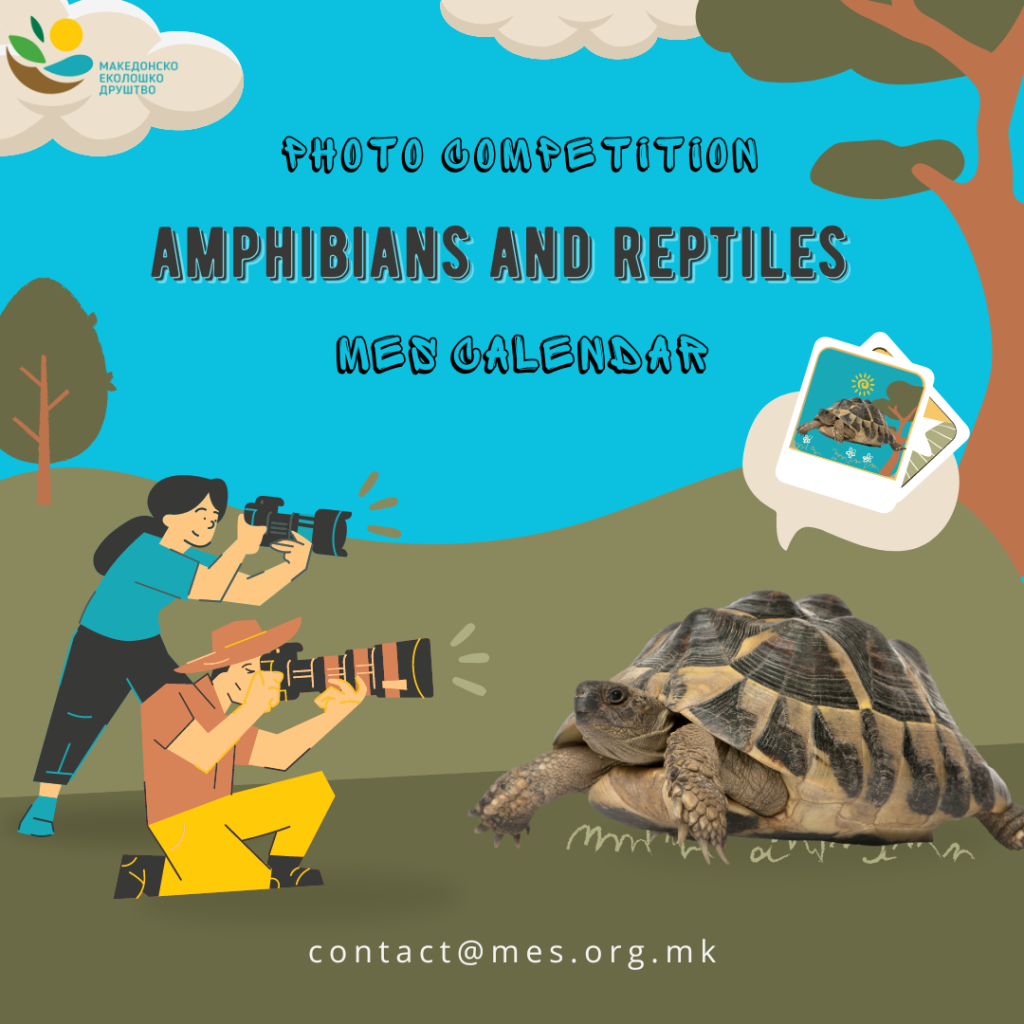
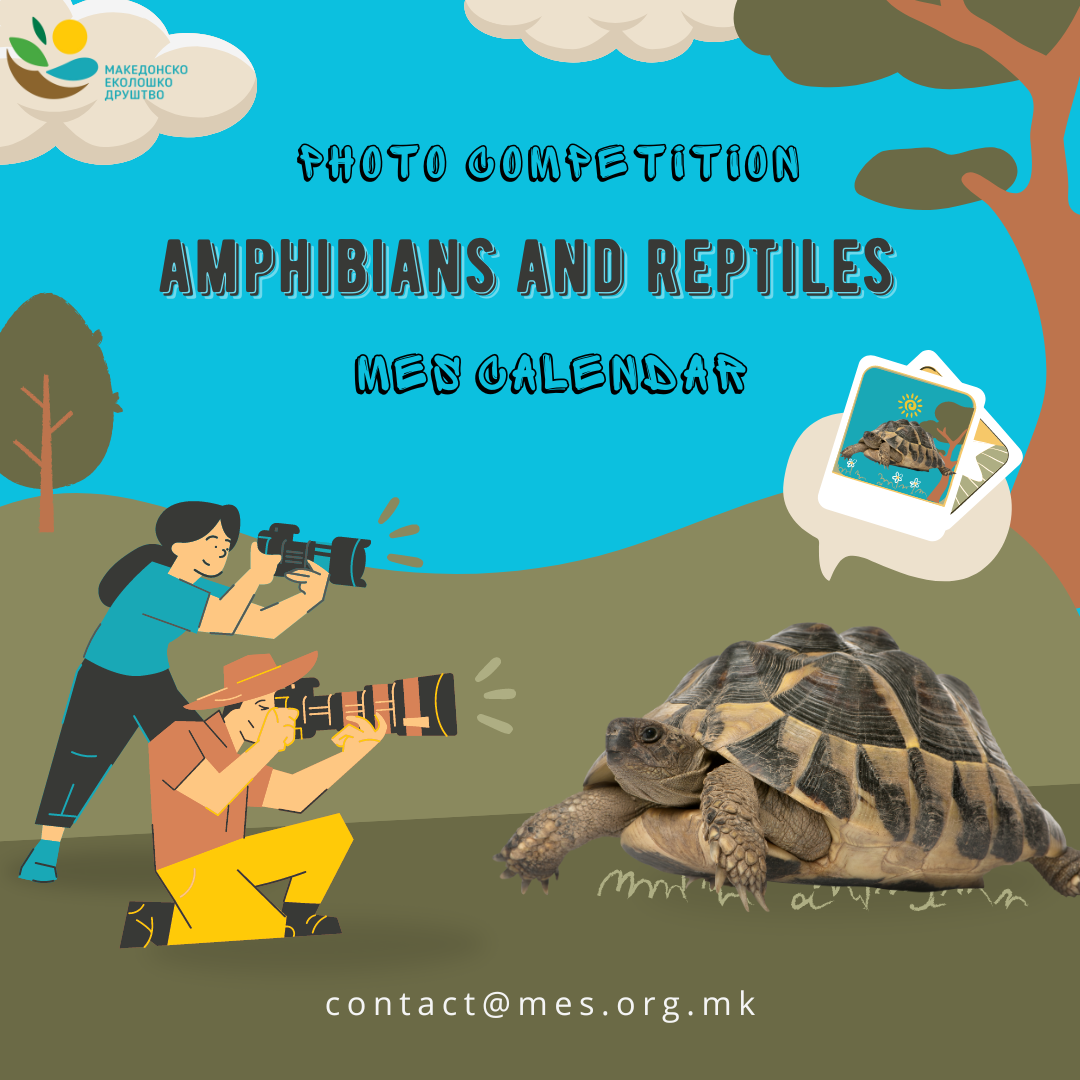
  • Competition for photographs of amphibians and reptiles for the Macedonian Ecological Society 2025 calendar

    Competition for photographs of amphibians and reptiles for the Macedonian Ecological Society 2025 calendar

    The period for participation in this competition is from April 3, 2024, to October 10, 2024.

    Types of photos that can participate

    To be accepted in the competition, the photos must depict amphibians or reptiles photographed in nature in Macedonia.

    Jury

    The jury consists of MES employees and Assembly members. The jury will anonymously review the submitted photographs.

    The jury will select 12 photographs to be awarded. All selected photographs will be used to design the MES Calendar for 2025.

    Announcement of winners

    The winners of the competition will be announced on 01.11.2024 on the MES website and relevant social media.

    General rules

    By submitting a photograph to the Competition for photographs of amphibians and reptiles of the Macedonian Ecological Society, you agree to the following:

    You have sole ownership of the photograph and all its rights. No rights associated with the photograph are given to other individuals, organizations, companies, or entities. No part of the image defames, harms, or violates the rights of any person.

    MES will obtain a permanent non-exclusive free right to use the photographs submitted for purposes related to raising the organization’s profile, promoting the organization’s work, and promoting the competition in the following years. MES is a nonprofit citizens’ association, and your photograph will not be used for profit-making purposes or any other commercial purposes. MES may use the photograph in its entirety, in part, or with modifications. Your name will be credited with each use of the photograph, unless otherwise requested.

    Your data will be used for internal purposes of MES related solely to the organization of this competition.

    How to participate

    Photographs should be submitted to contact@mes.org.mk

    One participant can submit multiple photographs. If a participant submits more than one photograph, all will be considered, but no more than two photographs by one author will be selected.

    The photographs must meet the following standards:

    They must depict amphibians or reptiles photographed in nature in Macedonia
    The photographs must have a minimum resolution of 2600×2600 px
    They must be submitted in JPG format
    They must contain all additional information (species name, location, and date of photography)
    Basic processing of the photographs is allowed, including cropping, contrast, lighting, color, and intensity adjustments. Adding additional elements (logo, signature, frame, border, or similar) is not allowed.