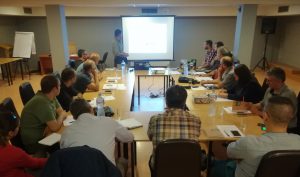
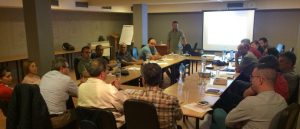
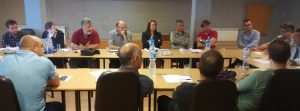
On 19 th of November 2019, The Macedonian Ecological Society in collaboration with the Ministry of Environment and Physical Planning organized the third meeting of the National Anti-Poison working group in Skopje. The aim of the meeting was the formalization of the Action Plan for combating wildlife poisoning under the national legislation. Implemented activities since the last meeting were presented to the working group and it was discussed about the measures that are a priority in regards to the problem with wildlife poisoning. Also key gaps and overlaps were identified.
A diverse group of representatives from public institution attended the meeting such as: State Environment Inspectorate, professors from the Faculty of Natural Sciences and Mathematics, University Goce Delcev – Shtip, Faculty of Security, Faculty of Veterinary Medicine, Ministry of Environment and Physical Planning, Ministry of Interior and Agency of Food and Veterinary. The implementation of the national Action plan is a component under the Balkan Anti-Poisoning project. The project is financed by the Vulture Conservation Foundation and is being implemented in Albany, Bosnia and Herzegovina, Croatia, Greece and Serbia. The Macedonian Ecological Society has a role as a partner organization from North Macedonia.
Working across five states in the Balkans, the Balkan Anti-Poisoning Project brings together governments, wildlife conservation groups, hunting associations, farmers and scientists in an ambitious conservation project to tackle the single biggest threat to vultures, illegal poisoning.
Vultures in the Balkans
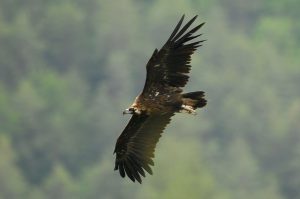
Cinereous vulture (This species no longer breeds in Macedonia)
Once a common sight over the Balkan states the populations of the four European species of vultures, drastically declined over the course of the 20th Century. This led to the almost regional extinction of the bearded vulture and reduced the population of cinereous vultures to a small colony in Greece of 30 breeding pairs, while about 60 pairs of Egyptian vultures are left on the peninsula. Griffon vultures have become extinct from several countries including Albania, Bosnia & Herzegovina and Montenegro and the 600 pairs are found in isolated populations across the region, larger populations of 100 pairs can be only found in Croatia, Bulgaria and Serbia.
Illegal poisoning in the Balkans
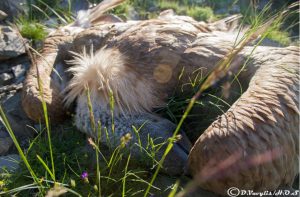
Wildlife poisoning is the single biggest threat to vultures in the Balkans today, and is the cause of the dramatic decline and regional extinction seen over the last 30 years. It is affecting the wild populations remaining in the Balkans and the conservation efforts to recover the populations across the whole of the region. Poisoning has been recognised as the single most important threat that vulture populations are facing worldwide within the Vulture Multi-species Action Plan (Vulture MsAP), a global plan for the conservation of 15 species of vultures, co-developed by the Vulture Conservation Foundation.
Griffon vulture – poison victim in Greece (2018)
The practice of using poisoned baits by farmers and hunters is seen as a quick and affordable ‘solution’ to control predators such as wolves, jackals, foxes and feral dogs to protect livestock and in commercial hunting areas. Despite being illegal throughout the Balkans, the practice is widespread partly due to poor enforcement of the law protecting wildlife and the free availability of poisons in markets and online.
To achieve the aim of the Balkan Anti-Poisoning Project the project team will work with partners in each of the five Balkan states to establish national anti-poison working groups, comprised of representatives from relevant governmental institutions and conservation organisations. Each working group will be tasked with developing national anti-poison road maps which will set a baseline for future work combating wildlife poisoning. As well as developing of road maps the project will also launch a large scale awareness raising campaign to inform public audiences in the five states about the impacts of illegal poisoning on wildlife.
On the 17 May in Skopje, the Macedonian Ecological Society (MES) in cooperation with the Vulture Conservation Foundation (VCF) organised an international workshop to initiate the development of an action plan against wildlife poisoning.
The aim of the meeting was to prepare a national scheme to address wildlife poisoning incidents in line with the domestic legislation by involving competent institutions. The meeting provided the opportunity to exchange experience with experts from Spain, thereby discussing priorities and drawbacks. Meeting’s remaining part defined recommendations for the upcoming development of an action plan against wildlife poisoning.
The preparation of an action plan against wildlife poisoning is a component of the Balkan Anti-Poisoning Project (BAPP) implemented in Macedonia, Albania, Bosnia and Herzegovina, Croatia and Greece. MES’s project involvement is in the capacity of a partner organisation from Macedonia.
The workshop was attended by domestic experts from the State Environmental Inspectorate, Faculty of Security, MoI’s Forensic Department, Faculty of Veterinary Medicine, Food and Veterinary Agency, Veterinary Centre, and also by international experts from Bulgaria, Serbia and Spain.

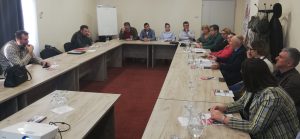 A diverse group of representatives from public institution attended the meeting such as: State Environment Inspectorate, professors from the Faculty of Natural Sciences and Mathematics, University Goce Delcev – Shtip, Faculty of Security, Faculty of Veterinary Medicine, Ministry of Environment and Physical Planning, Ministry of Interior and Agency of Food and Veterinary. The implementation of the national Action plan is a component under the Balkan Anti-Poisoning project. The project is financed by the Vulture Conservation Foundation and is being implemented in Albany, Bosnia and Herzegovina, Croatia, Greece and Serbia. The Macedonian Ecological Society has a role as a partner organization from North Macedonia.
 Working across five states in the Balkans, the