Category: Програма за закрепнување на балнканскиот рис

  • The Balkan Lynx Recovery Programme Newsletter (December, 2023)

    The Balkan Lynx Recovery Programme Newsletter (December, 2023)

    The Balkan Lynx Recovery Programme Newsletter is a publication which promotes the most important news and achievements of all partners involved in the Programme. This issue covers news surrounding the implementation of the Programme; the contribution that hunters make to the Programme; personal stories from our colleagues as well as the most important events and national changes to nature conservation.

    The Newsletter is available in three languages:

    Билтен на Програмата за закрепнување на балканскиот рис

    Balkan Lynx Recovery Programme Newsletter

    Programi për rimëkëmbjen e rrëqebullit të Ballkanit Newsletter

  • Honoring our endangered big cat on International Lynx Day

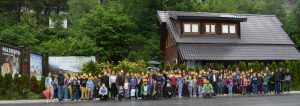
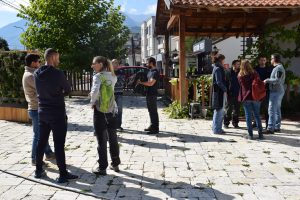
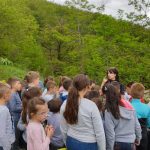
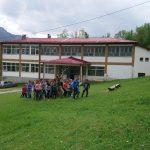
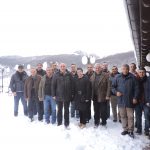
    Group photo in front of the info center of Mavrovo National Park © Hamlet Ahmedi

    Raising public awareness for biodiversity is one of the main pillars in the work of conservationists. Year-round, many days are dedicated to commemorate and shed some light on various endangered species and the number of these days keeps growing. Since 2018, International Lynx Day is celebrated every year on 11th of June to spotlight Europe’s biggest cat and its importance for a complete and healthy ecosystem.

    Working on the public’s appreciation of this critically endangered carnivore in our forests is essential for its survival and has been a high priority of the Balkan Lynx Recovery Programme. This year, MES and Mavrovo NP have joined forces and brought the topic to the younger generation of locals, organizing an educational event in the park’s infocentre at the heart of Mavrovo. The event was also open for MES’ members, especially encouraging those who have little ones to come and join.

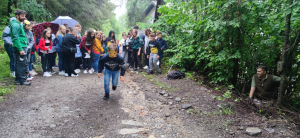
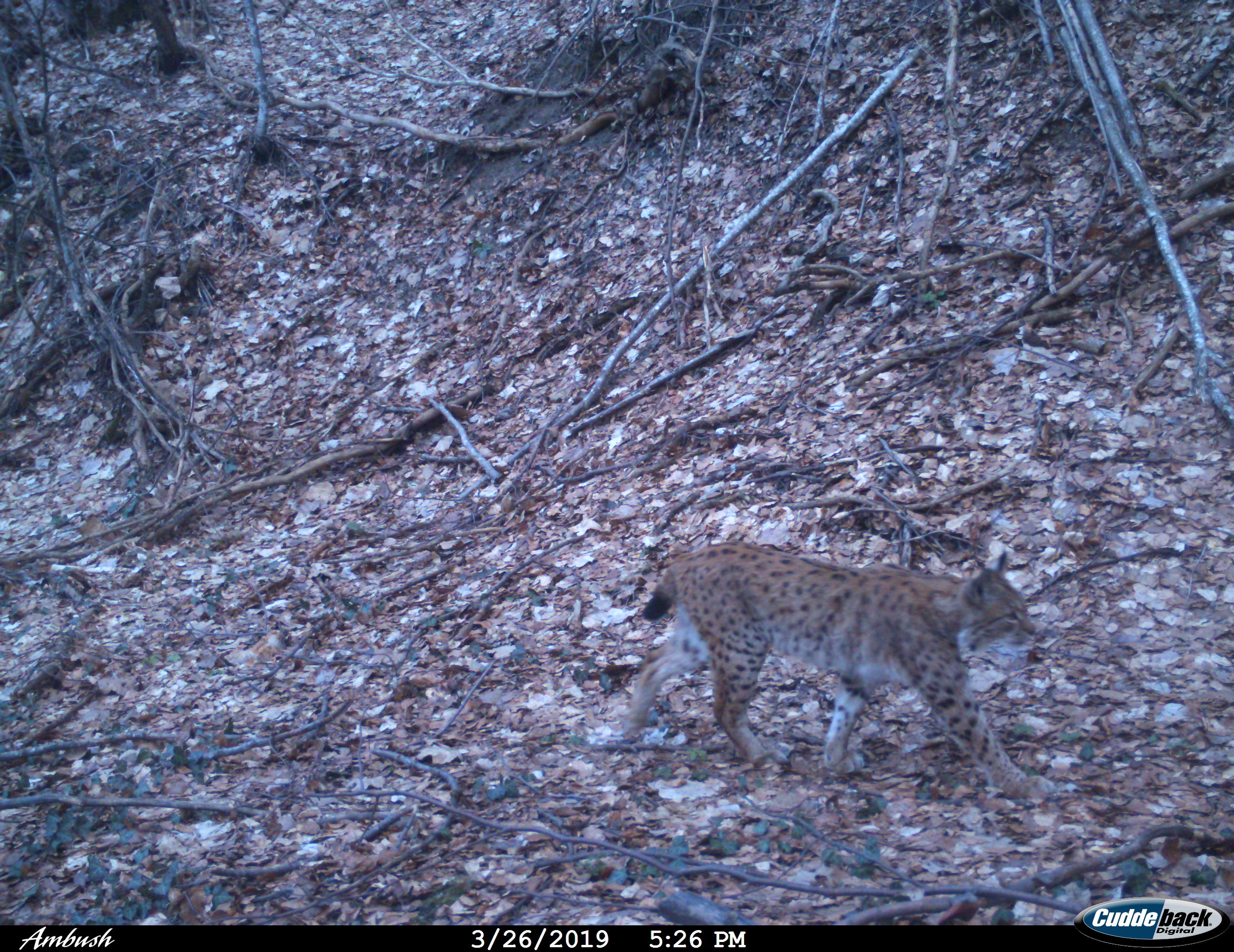
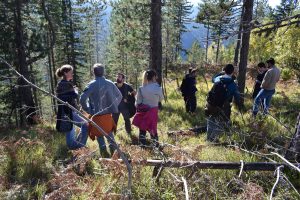
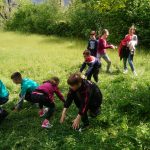
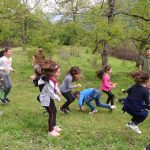
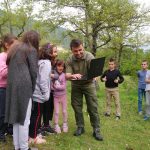
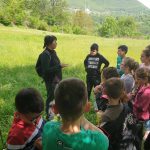
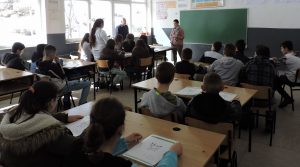
    Around one hundred children from the region were accompanied by their teachers, and had the chance to learn about the lynx through a short and interesting presentation that highlights the pivotal features and roles this cat plays, as well as the danger it faces. Through some questions and discussion, they learned why it is important to learn to coexist with them. To jazz it up after the presentation, they had a glimpse of what it feels like to be a lynx in their natural habitat, roaming on a forest trail where a camera trap had been installed, while wearing a lynx-inspired mask on their faces. To their huge excitement, they also had the chance to see how a real GPS collar works with a playful hide-and-seek demonstration where one had to hide wearing it and the others used a radio-antenna to find them.

    Testing of the camera traps © Ekrem Veapi

    Activities like these are really important if we want to bring our work closer to the local community. Getting the people more familiar with the monitoring methods and the conservation activities will undoubtedly yield a higher acceptance of them. Involving the younger generations is key if we want to spark their admiration and interest for keeping the Balkan lynx around in the future

  • Lynx capture at Bukovikj locality

    Lynx capture at Bukovikj locality

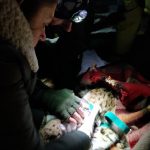
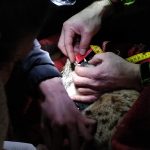
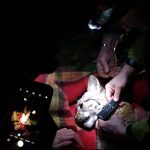
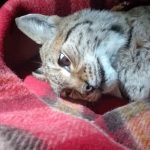
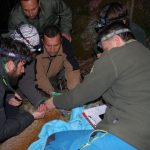
    New lynx is here! 12 February 2020 the lynx team of the Macedonian Ecological Society (MES) box-trapped a new individual of the rare Balkan lynx in Bukovikj, near the town of Kichevo. Representatives from the Faculty of Veterinary Medicine in Skopje and Sokol-Z Hunting Society from Zajas village assisted during lynx sedation and taking of measurements and samples of hair and blood. The procedure established that the lynx is a healthy female aged 2–3 years, weighing 15 kg.

    This is the second radio-collared female (after Maja) to be monitored by radio-telemetry and GPS-tracking. It is crucial to broadening our knowledge about lynx distribution, and food and habitat needs. The lynx was camera-trapped last year on the same site. For the time being, the lynx is in good health, as seen from the locations using GPS-tracking, which revealed its first prey after the capture – roebuck kill from 4–5 days ago.

    Our friends from Sokol-Z HS were given the honour of naming the lynx. They opted to name this beauty Narcisa. Narcisa, we wish you abundant prey and many offspring!

    Ever since 2010, MES has captured and radio-collared a total of eight lynx individuals, providing valuable data about the behaviour of this secretive animal.

  • Balkan Lynx Partner Meeting in Peja, Kosovo

    Balkan Lynx Partner Meeting in Peja, Kosovo

    A kick-off meeting for the fifth phase of the Balkan Lynx Recovery Programme took place in Pejа, Kosovo in the beginning of October this year. The meeting was attended by the partners from MES, PPNEA, KORA, EuroNatur and was hosted by the NGO ERA Group from Kosovo. The partners discussed the achievements accomplished in the last three months since phase onset and the activities that need more attention to be carried out on time. The fifth phase represents a continuation of the fourth phase where many activates commenced and are being implemented. In this stage, MES will continue working on the education of schoolchildren in primary schools in the Mavrovo region and its surroundings, and also continue the work with the pilot hunting grounds from the western part of the country. The remaining strategies are focusing on research and monitoring of the Balkan lynx population, proclamation of Suvi Dol as a protected area, implementation of the Conservation Action Plan in Mavrovo National Park and working towards the improvement of the policy regarding the hunting and nature protection in Macedonia. During the visit, an excursion was organised to Rugova Gorge, Prokleitije Mts, where the team was introduced to the field activities of the colleagues from ERA.

  • Balkan lynx education in primary schools complete

    Balkan lynx education in primary schools complete

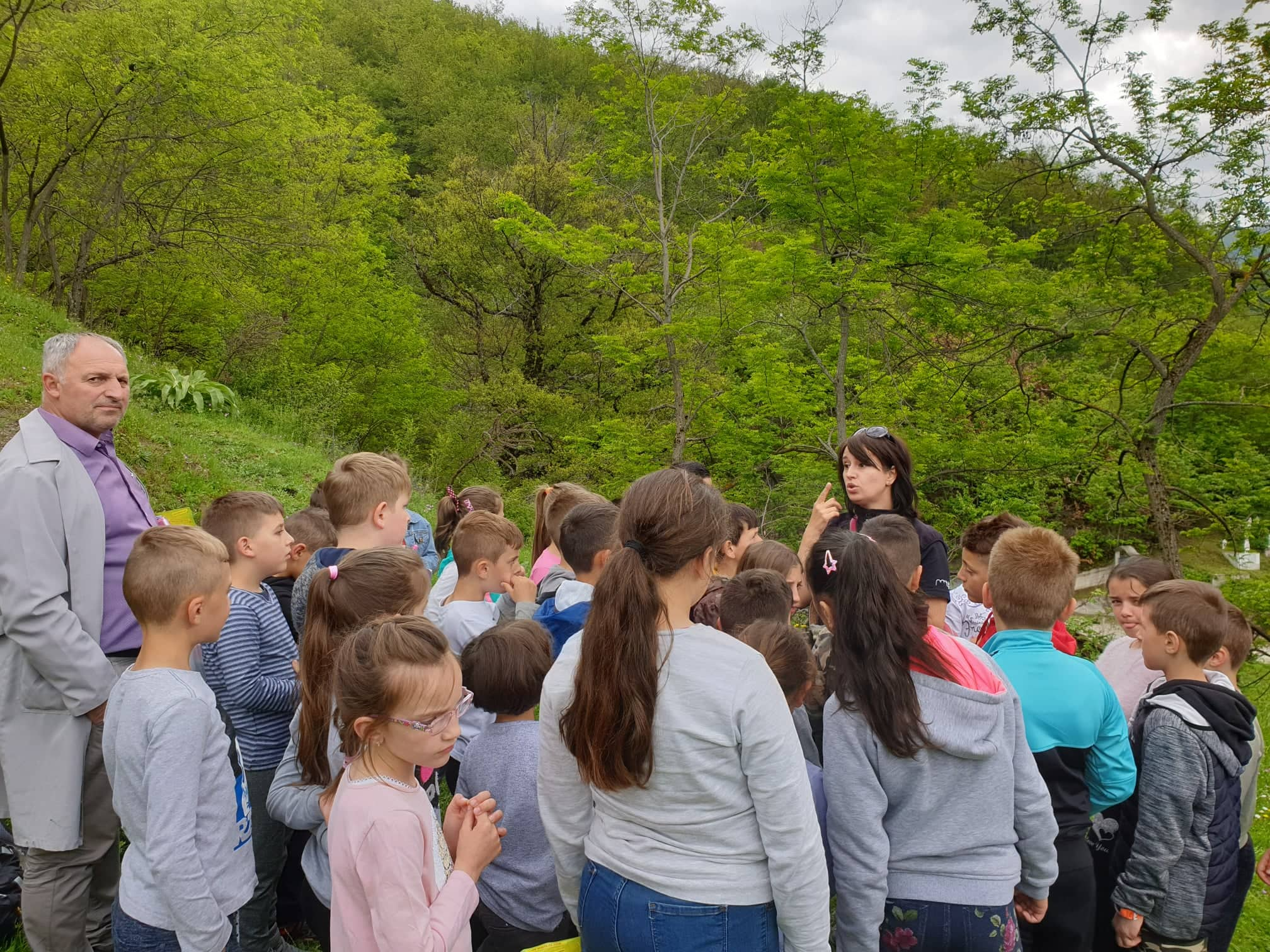
    Last week, 30 and 31 May 2019, we rounded off the educational activities for the schoolchildren of the primary schools in the Municipality of Mavrovo and Rostushe. Educational activities, implemented by representatives from the Macedonian Ecological Society (MES) and Mavrovo National Park, began in March, with a series of lectures about the Balkan lynx. The third, final part of education included field activities, as part of their outdoor education. This presented an unusual opportunity for schoolchildren from the villages of Zhirovnica, Rostushe, Trebishte and Velebrdo to get familiar with the methodology and means of conducting research about the Balkan lynx. In that respect, together with first-to-fifth-grade schoolchildren we visited the local forest, followed wildlife trails, imitated wild animals to see the use of camera traps, and also used radio-telemetry to search for the “lynx” schoolchildren.

    Lynx education represents part of the Education Strategy of the Balkan Lynx Recovery Programme. The education package in primary schools had its inception ever since 2015, whereas so far a total of 1,500 schoolchildren have been included.


  • New male lynx collared in Mavrovo National Park

    New male lynx collared in Mavrovo National Park

    Another lynx got a GPS collar in Mavrovo National Park to track its movement. On 27 February, together with Park staff, we managed to collar this individual and now we are successfully tracking its movement. The lynx is a two-year old male weighing 19 kilograms.

    –              After the Park’s employees called us about a chamois kill, we returned at the site and placed a foot snare. The lynx returned at the feeding site six hours later, whereas the whole procedure to take blood and measures lasted for about an hour, after which the lynx was released. On this occasion we had assistance from Miha Krofel, a lynx expert from Slovenia – stated Dime Melovski, managing MES Balkan Lynx Recovery Programme.

    It will be interesting to find out whether this lynx has not established its own territory yet. Such case will be helpful to determine which paths and corridors are used by lynx when establishing their home range. Hence, following the lynx’s whereabouts in the next few months will be of crucial importance.

  • The largest Balkan lynx captured in Mavrovo National Park

    This weekend marked the capture of another Balkan lynx individual, near the village Sence, Mavrovo National Park, sixth in a row ever since the research inception in 2010 using radio-telemetry and GPS tracking by the Macedonian Ecological Society (MES). It should be underlined that the lynx, provisionally named B8, is the record-holder for the largest Balkan lynx individual ever to be captured for scientific study. Weighing twenty-seven kilograms, this individual is a real-life “beast”.

    –This weekend we received a signal that a box-trap had been activated and we, the MES team and Park employees, headed immediately to the site. We were pleasantly surprised to find a large, 27-kg male, which was identified as a resident of the Park, with a total of 12 appearances on camera-traps on various sites over the last six years, states Dime Melovski, managing MES Balkan Lynx Recovery Programme.

    Having been collared, B8 for three days in a row has been sending information about its whereabouts within the Park. Radio-telemetry data will help to better understand lynx’ food and habitat preferences, and its range.

    MES organised a poll to give a name to the new lynx. Proposals included: Bistri, Filip, Jovan, Mujo, Senko, and Vir. A total of 913 people placed a vote, with the majority choosing the name Bistri.

    Ever since 2010, MES has captured and collared six lynx individuals: Marko, Riste, Martin, Deki, Maja, and the latest – Bistri.

    It is estimated that the Balkans hosts less than 50 individuals of the Balkan lynx, a species which in 2015 earned the Critically Endangered status according to the International Union for Conservation of Nature (IUCN).

  • Promotion of the Conservation Action Plan for the Balkan Lynx in Mavrovo National Park

    Promotion of the Conservation Action Plan for the Balkan Lynx in Mavrovo National Park

    On 26 December 2018, the Conservation Action Plan (CAP) for the Balkan Lynx was presented in the Mavrovo National Park (MNP), foreseeing systematic activities for the conservation of Balkan lynx in the MNP area. Activities are financially supported by the Balkan Lynx Recovery Programme, implemented by the Macedonian Ecological Society (MES) for twelve years now, and will be conducted in close cooperation with MNP until the end of 2020. The document was prepared and revised in the last five years in partnership with MES, MNP and other relevant stakeholders from the country and abroad.

    –The main goal of the Action Plan is to give significant contribution to conserve the population of the critically endangered Balkan lynx. The CAP represents operative document specifying concrete activities and measures, also providing financial and time frames. The CAP pertains to the lynx population core area, currently within MNP, whereas planned activities include prey species monitoring, education, raising public awareness, establishing safe biocorridors for large mammals, transboundary cooperation, etc., stated Dime Melovski, MES Wildlife Programme Manager.

    Current situation with the Balkan lynx in Macedonia remains worrisome. Latest estimation show that lynx population in its entire potential region in the Southwest Balkans amounts to 40 adult individuals. Such figures were acquired using direct counting of individuals within the core area in MNP and their further extrapolation for the remaining suitable habitats. The counting of individuals was done using the globally accepted method of camera-trapping in the years 2008, 2010, 2013, 2015 and 2018. MNP and its surroundings host between 10 and 18 lynx, with average population density of 1.7 individuals per 100 km2.  Its population size below 50 adult individuals earns the Balkan lynx the critically endangered (CR) status according to the criteria of the International Union for the Conservation of Nature (IUCN), and therefore, it has found its place on the IUCN Red List ever since 2015.

  • Successful meeting between NP “Mavrovo and NP “Malet e Sharrit” in Kosovo

    Successful meeting between NP “Mavrovo and NP “Malet e Sharrit” in Kosovo

    On 11 December 2018, a meeting took place on Shar Mountain in Kosovo among
    representatives of the Mavrovo National Park in Macedonia and the Sharri National Park in Kosovo, organised by the Macedonian Ecological Society (MES).

    The aim of this meeting was to present the work of MES regarding Balkan lynx conservation and the initial results from the monitoring of chamois in the Mavrovo National Park, conducted in cooperation with park employees.

    Participants exchanged views about future transboundary cooperation between the two national parks, whereas also addressed were common problems pertaining to the decreasing number of livestock, transboundary utilisation of given resources, namely, game, pastures and blueberry, as specific challenges faced in both parks.

    The meeting was organised as part of the activities of the Balkan Lynx Conservation Action
    Plan in Mavrovo National Park, implemented by MES in partnership with Mavrovo National
    Park.

  • Lynx education week

    Lynx education week

    MES initiated its educational caravan in Western Macedonia as part of the Balkan Lynx Recovery Programme. The educational caravan visited the villages of Vejce and Shipkovica, on Shar Mountain, and the village of Vrbjani, in Mavrovo. The challenge of teaching in Albanian and Macedonian was overcome by including PPNEA, our partner organisation from Albania.

    The MES team cooperated with more than 20 teachers and around 400 children. Through the educational package, children had the chance to learn something more about the lynx ecology and biology, and also about the method of conducting field work, so that later on they may reproduce what they had learnt through game and problem solving.

    The team is especially grateful for the generous support provided by schools, teachers and the locals.