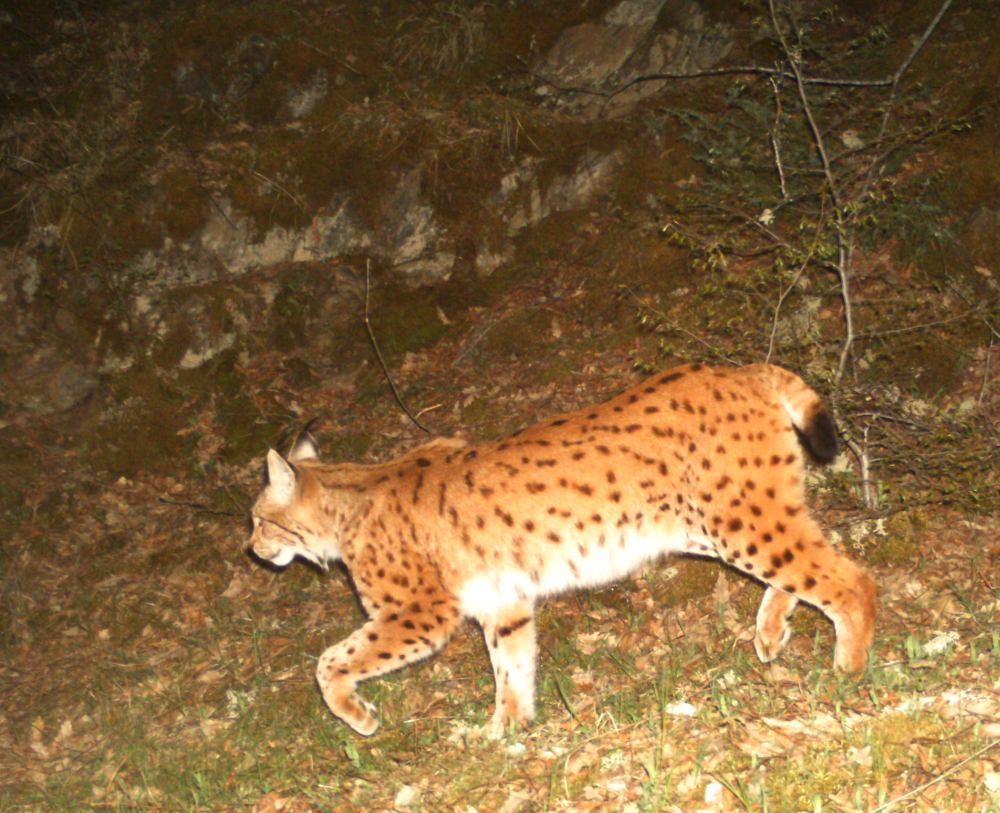

++ The Conference on the Convention of Migratory Species (CMS) takes place in Uzbekistan ++ The Balkan lynx is now also included in the agreement ++ Range states commit to measures to protect the critically endangered cat ++
Radolfzell, Samarkand. Good news from the CMS conference in Uzbekistan: the Eurasian lynx as well as its endangered subspecies, the Balkan lynx, have been added to the list of migratory species. “This is fantastic news for all lynx conservationists in Europe and Asia“, said Dime Melovski from the nature conservation organisation MES (Маcedonian Ecological Society). He presented the application for the listing of the Balkan lynx in Samarkand. “As for the Balkan lynx, with the governments of North Macedonia and Albania on our side, we can now take further important steps to protect this endangered population.”
The proposal to include the Balkan lynx in Appendix I of the Agreement was made by the government of North Macedonia and supported by the Albanian government. This is particularly pleasing, as with this step the government officials are making a clear commitment to protect the rare cat. There are only less than 50 individuals of the Balkan lynx left. Its range is scattered in North Macedonia, Albania and Kosovo. In the run-up to the conference, EuroNatur project partners MES (Маcedonian Ecological Society) in North Macedonia and PPNEA (Protection and Preservation of Natural Environment in Albania) in Albania campaigned for this important step towards protecting the Balkan lynx and lobbied the governments in Skopje and Tirana.
With the inclusion of the Balkan lynx in the CMS, the governments of the countries commit themselves to creating the best possible conditions for the conservation of the Balkan lynx. This includes, among other things, developing a regional strategy for protecting the endangered subspecies and translating it into national action plans. This will facilitate cross-border conservation efforts, such as monitoring the Balkan lynx. “This decision marks an important commitment to the protection of the Balkan lynx by the authorities in North Macedonia and Albania,” says Lisa Leschinski, project manager at EuroNatur. “We will closely monitor whether the promises are followed by action.”
Background information:
– Convention on the Conservation of Migratory Species of Wild Animals (CMS): As an environmental treaty of the United Nations, the CMS provides a global platform for the conservation of migratory animals and their habitats. Migratory species threatened with extinction are listed in Appendix I of the Convention. CMS Parties endeavour to strictly protect these animals, conserve or restore the places where they live, remove obstacles to their migration and control other factors that could endanger them. In addition to establishing obligations for each state that accedes to the Convention, the CMS promotes concerted action between the range states of many of these species. The 14th CMS takes place from 12 to 17 February in Samarkand, Uzbekistan.
– Lynx and CMS: The application for inclusion of the lynx in the CMS includes the listing of the Eurasian lynx in Appendix II and one of its subspecies, the Balkan lynx, in Appendix I. In addition to North Macedonia and Albania, Bosnia-Herzegovina and Uzbekistan were co-proponents of including the Balkan lynx in the list of migratory species. The entire process was initiated and supported by the regional office of UNEP – United Nations Environment Programme.
– Balkan lynx: The Balkan lynx is a subspecies of the Eurasian lynx. Only fewer than 50 specimens of this endangered cat still roam the mountain forests of the southern Balkans. The Balkan lynx is facing a lack of sufficiently large and contiguous habitats due to the overuse of forests for firewood and timber production. This is also resulting in a shortage of prey, and the situation is being further exacerbated by the illegal hunting of already diminished wildlife populations. However, the lynx too is frequently falling victim to poachers looking for rare trophies or who blame the predatory cat for the deaths of domestic animals. Together with partner organisations in Switzerland (KORA) and south-eastern Europe (ERA, MES, PPNEA), EuroNatur is committed within the Balkan Lynx Recovery Programme (BLRP) to promoting knowledge about lynx, effectively protecting the elusive cats and preserving their habitats.

 The Balkan Lynx Recovery Programme Newsletter is a publication which promotes the most important news and achievements of all partners involved in the Programme. This issue covers news surrounding the implementation of the Programme; advances made in researching wild animals in Kosovo; the contribution that hunters make to the Programme; personal stories from our colleagues as well as the most important events and national changes to nature conservation.